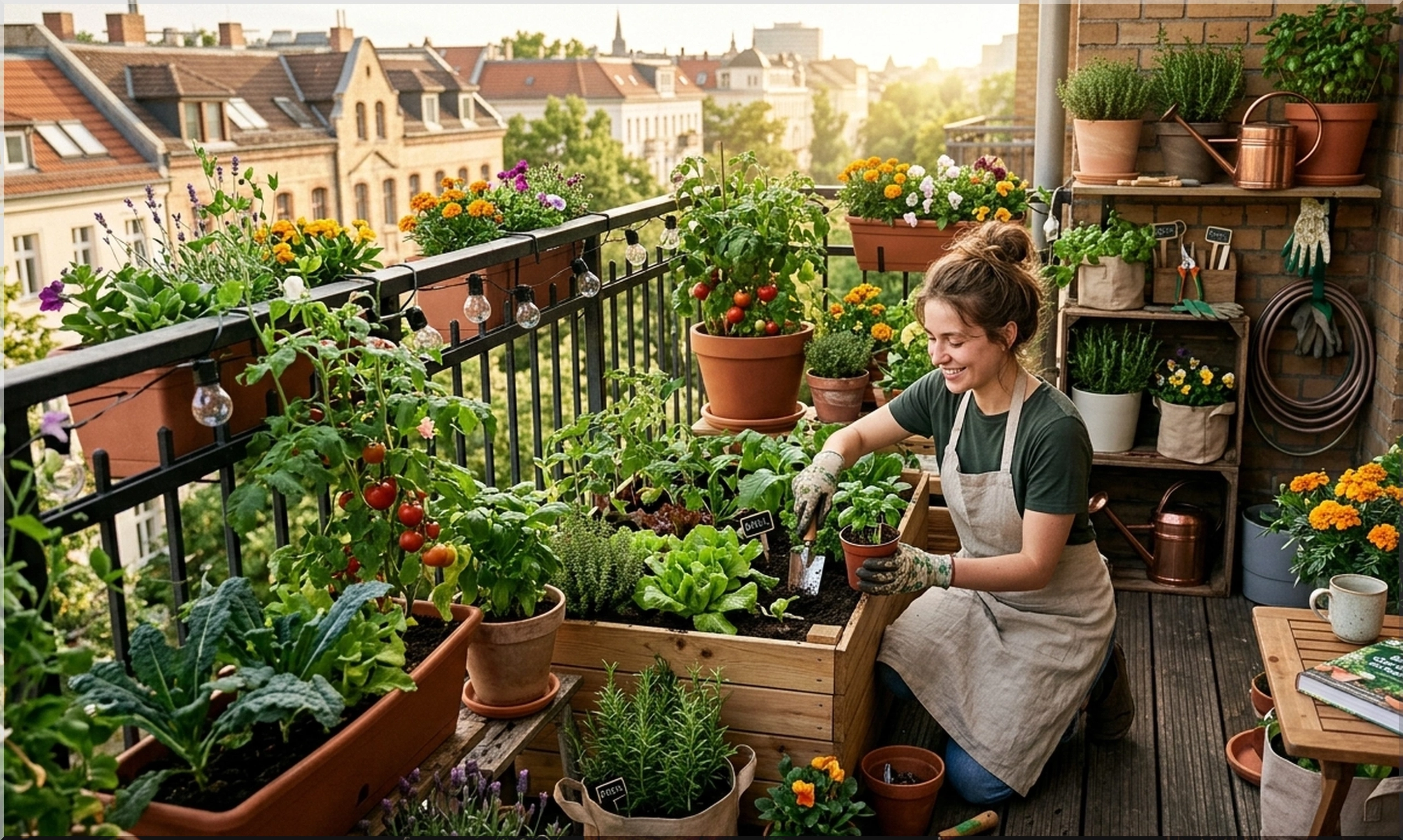
A balcony may look too small for a garden until you put the first pot in the right place. Then the math changes. One basil plant turns into better pasta, one chair turns into a morning ritual, and one dull slab of concrete starts earning its rent.
Why Balcony Gardening Works So Well For Beginners
Balcony gardening for beginners succeeds because it starts small. You do not need a backyard, a shed full of tools, or a grand weekend plan that ends with sore knees and regret. You need light, drainage, good potting mix, a few containers, and plants that suit the space.
Small spaces also teach faster. You see dry leaves before the whole plant suffers. You spot aphids before they host a family reunion. You learn which corner gets hot, which railing catches wind, and which pot asks for water like a tiny green drama queen.
An apartment balcony garden can grow herbs, salad greens, compact vegetables, flowers, and calming greenery. It can also give renters a low-commitment way to garden without digging, drilling, or arguing with a lawn mower.
Start With The Balcony Before Buying Plants
The best beginner move sounds boring: study the balcony. It saves money, space, and the small sadness of watching a sun-loving tomato sulk in shade.
Track your balcony for one full day. Check the light in the morning, midday, and late afternoon. Notice wind, reflected heat, rain coverage, and how much space you still need for a chair, door swing, laundry rack, or coffee.
Match Plants To Sunlight
Most food crops want more light than beginners expect. Fruiting plants need the brightest spots. Leafy greens and many herbs handle less direct sun. Shade balconies still support greenery, but they ask for different plant choices.
| Balcony light | Direct sun per day | Best beginner choices |
|---|---|---|
| Full sun | 6+ hours | Cherry tomatoes, chillies, basil, rosemary, strawberries |
| Part sun | 3 to 6 hours | Lettuce, spinach, parsley, mint, chives, pansies |
| Bright shade | Under 3 hours | Ferns, begonias, pothos, shade-tolerant foliage |
Pro-Tip: Take photos of your balcony every two hours on a sunny day. Your phone will tell the truth better than your memory after a trip to the garden center.
Check Wind, Weight, And Water
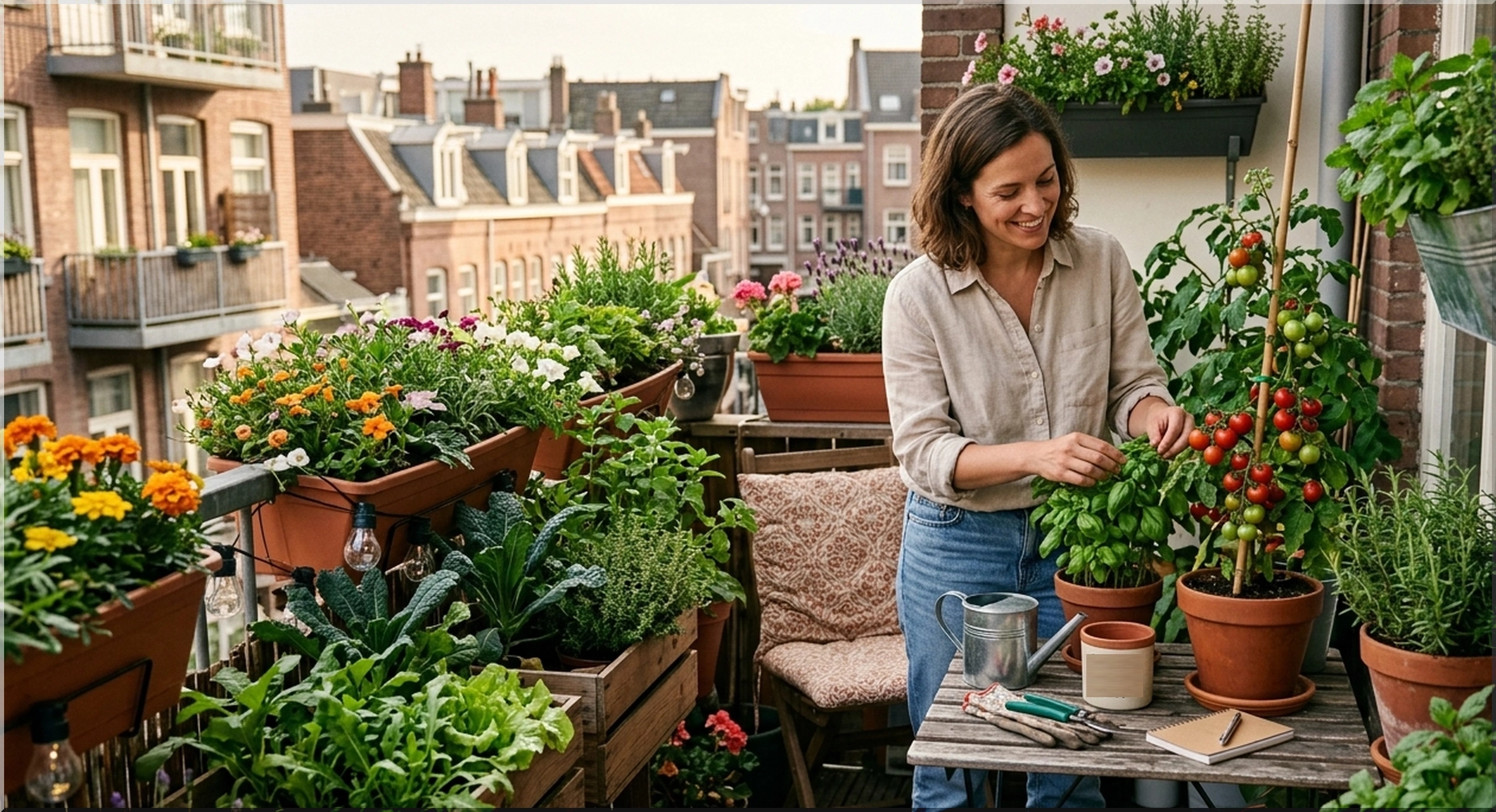
Wind dries containers fast and can snap soft stems. Higher floors often feel breezier than street level. Use heavier lower pots, grouped planters, trellis screens, or sturdy railings to reduce damage.
Also check building rules before you buy large planters. Wet soil weighs far more than dry potting mix. Lightweight plastic, resin, fiberglass, and fabric grow bags usually suit balconies better than heavy stone or concrete containers.
Water creates another small-space problem. Drainage keeps roots healthy, but runoff may annoy neighbors below. Use saucers, trays, self-watering pots, or careful hand-watering to keep peace downstairs.
Choose Containers That Give Roots Room
In container gardening, pot size controls root growth, moisture, and plant health. Tiny pots look cute on day one. By day twenty, they dry out like biscuits and make plants cranky.
Choose containers with drainage holes. Skip garden soil because it compacts in pots and blocks airflow around roots. Use a quality potting mix designed for containers, then refresh it with compost or plant food as crops grow.
Good beginner container choices include:
- Plastic pots for low weight and easy moving
- Fabric grow bags for vegetables and root airflow
- Resin or fiberglass planters for larger feature plants without huge weight
- Railing planters for herbs and trailing flowers
- Self-watering pots for hot balconies or forgetful humans
As a simple rule, give herbs at least 20 cm of pot depth, leafy greens 20 to 30 cm, and tomatoes 30 to 40 cm or more. Bigger pots cost a little more upfront, but they forgive skipped watering better.
Pick Plants That Reward Beginners Quickly
Start with plants that grow fast, taste useful, or flower without too much fuss. A first balcony garden should build confidence, not stage a botanical exam.
Best Herbs For A Balcony Garden
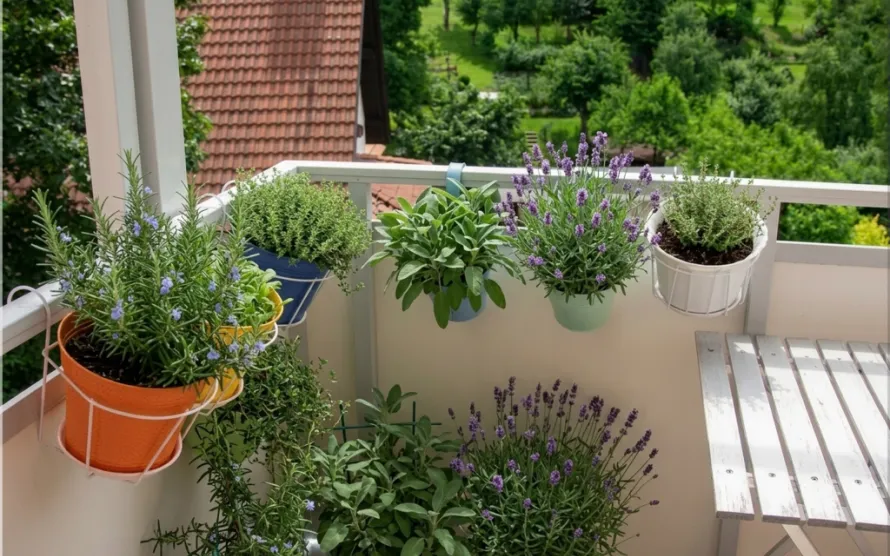
Herbs give the fastest payoff because you harvest small amounts often. They also fit neatly into pots, railing planters, and kitchen-adjacent corners.
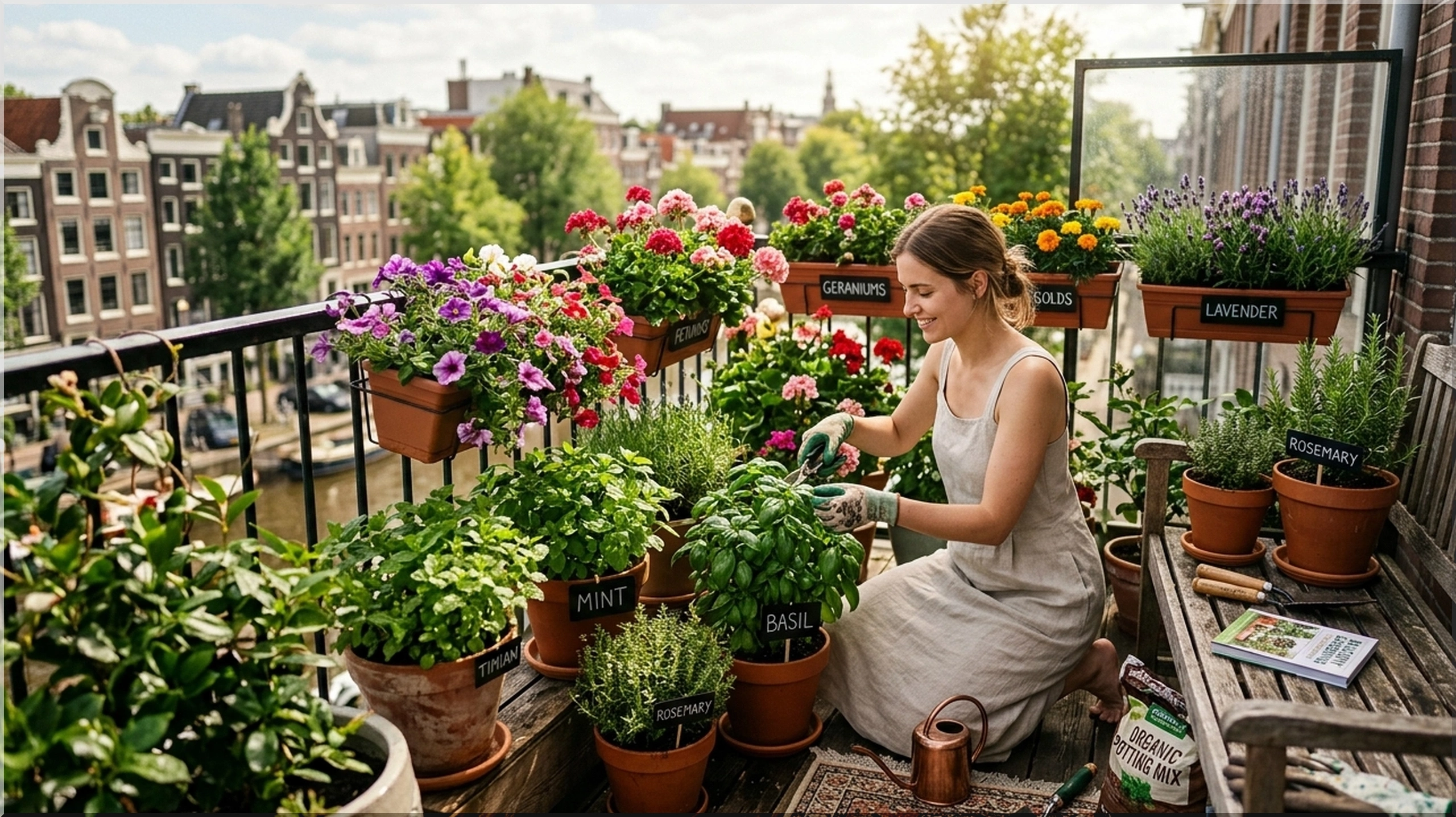
Try basil for warm sunny spots, parsley for part sun, mint in its own pot, chives for steady harvests, rosemary and thyme for drier sunny balconies, and coriander in cooler months.
Best Vegetables For Small Space Gardening
Choose compact varieties. Look for words such as bush, patio, dwarf, compact, or container on seed packets and plant labels.
Good beginner vegetables include lettuce, spinach, rocket, spring onions, radishes, dwarf beans, chillies, and cherry tomatoes. Strawberries also earn their place in hanging baskets and railing planters.
Skip space-hungry crops at first. Pumpkins, corn, and large melons want more room than most balconies can give without turning your outdoor space into a leafy obstacle course.
Best Flowers For Color And Pollinators
Flowers make the balcony feel finished, and many help attract bees and other pollinators. Marigolds, nasturtiums, alyssum, petunias, violas, and geraniums all suit beginner pots.
Nasturtiums bring bonus value. Their flowers and leaves taste peppery, so they sit happily between the salad bowl and the flower pot.
Build Your First Balcony Garden In One Weekend
A simple setup beats a complicated dream. Use this plan for a small, useful balcony garden that still leaves room to sit.
- Measure the balcony and mark the sunniest corner.
- Check building rules for weight, railing planters, and drainage.
- Buy three to five containers with drainage holes.
- Fill them with fresh potting mix, not soil from the ground.
- Start with two herbs, one leafy green, one flower, and one larger feature plant.
- Water deeply after planting until water reaches the tray.
- Watch the plants for one week before buying more.
This slower pace feels less dramatic, but it works. Plants teach you what the balcony can handle. Let the first group report back before you hire the next crew.
Watering And Feeding Without Overthinking It
Most balcony plant trouble starts with water. Containers dry faster than garden beds, particularly in sun and wind. They also suffer fast when water sits around roots.
Check moisture with one finger. Push into the top few centimeters of potting mix. If it feels dry, water until a little drains out. If it feels damp, wait.
Water the soil, not the leaves. Morning works best because plants start the day hydrated and leaves dry quickly. During hot spells, small pots may need daily attention. Larger pots, mulch, and self-watering containers reduce the workload.
Feeding also helps. Potting mix starts with nutrients, but regular watering washes them away. Use a slow-release fertilizer at planting, then add a gentle liquid feed during active growth for hungry crops such as tomatoes, basil, and leafy greens.
Definition: Small space gardening means growing plants in limited areas through containers, shelves, trellises, hanging baskets, and smart plant choice. The goal is not to cram more in. The goal is to make each pot earn its space.
Design A Small Apartment Balcony Garden You Will Still Use
A balcony garden should not block the balcony. That sounds obvious until five pots, two hanging baskets, and one ambitious tomato cage start guarding the door.
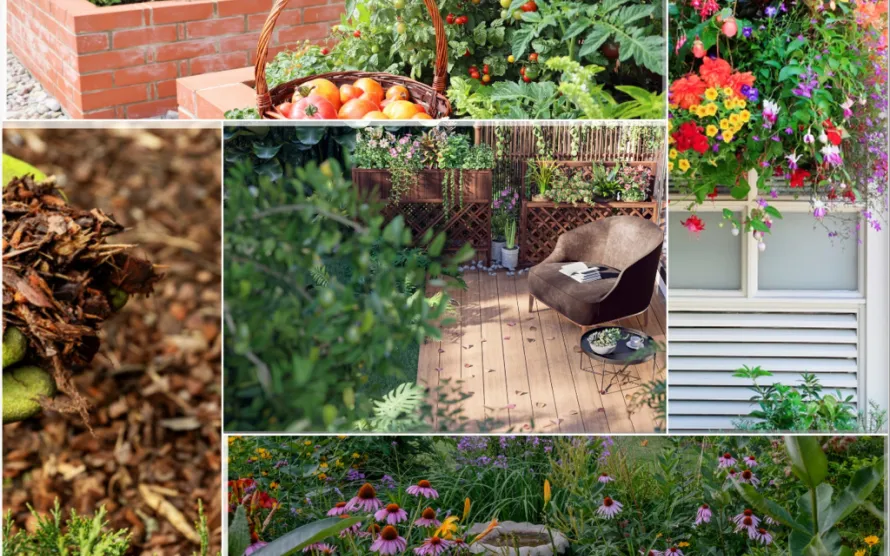
Keep a clear path first. Place taller plants at the back or along one side. Put herbs near the kitchen door so you actually snip them while cooking. Use vertical space for lightweight plants, not giant wet containers that test brackets and nerves.
Try these space-saving ideas:
- Put a narrow shelf against a wall for herbs and flowers.
- Train peas, beans, or climbing flowers up a trellis.
- Use railing planters for small herbs and trailing blooms.
- Hang baskets only where they will not hit faces, doors, or laundry.
- Choose folding seating so the garden does not steal the whole floor.
A calm balcony needs blank space too. Leave one area empty enough for a chair, yoga mat, or bare feet after work. The garden should make the balcony more usable, not turn it into a polite jungle.
Common Balcony Gardening Mistakes And Easy Fixes
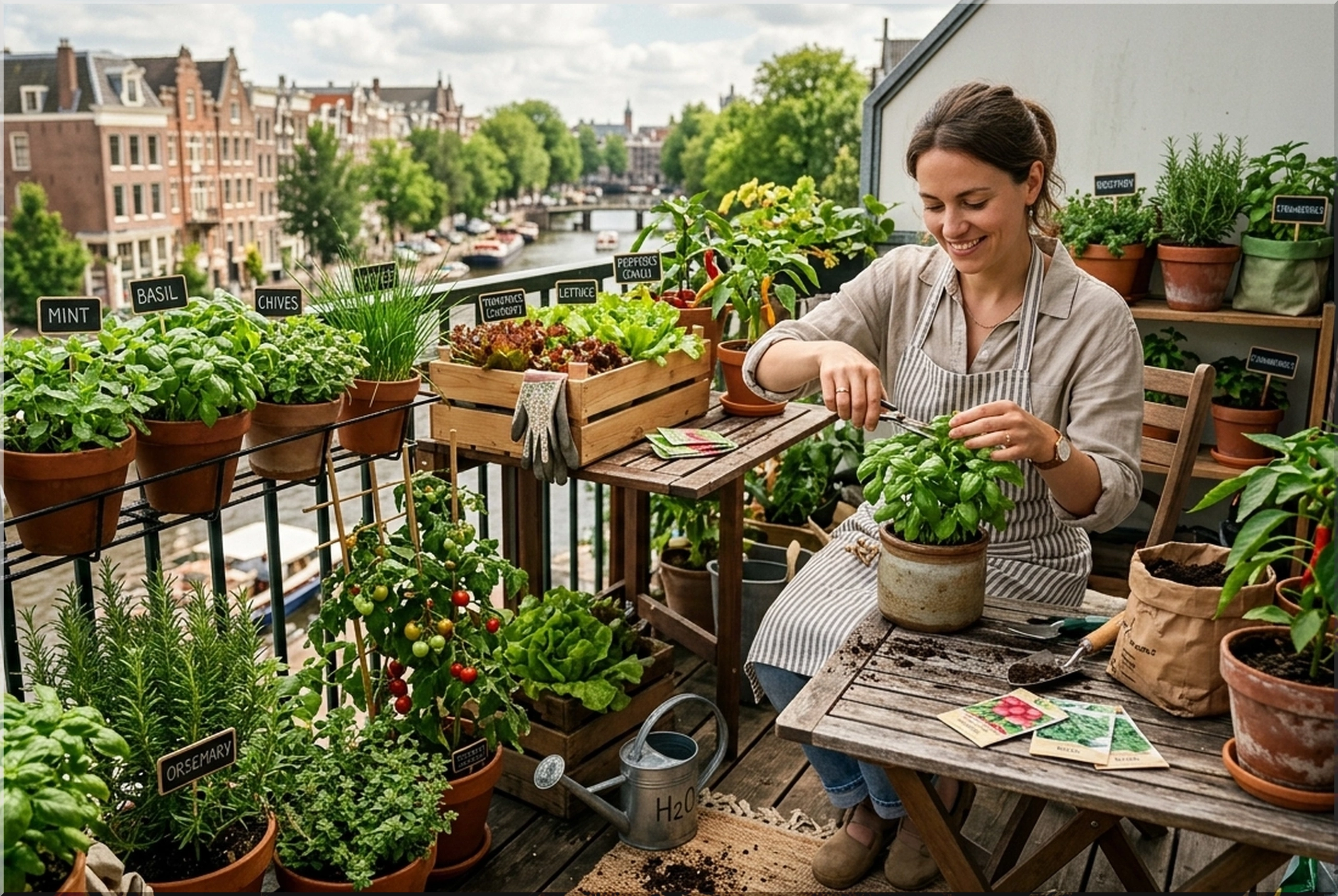
Beginners rarely fail because they lack talent. They usually fail because the plant, pot, and place never matched.
Too Much Ambition
A dozen new plants create a dozen new chores. Start with five or fewer containers. Add more after the first month.
Pots Without Drainage
Roots need air as much as water. Use containers with holes, trays, and pot feet where needed. Decorative outer pots work well when the real inner pot drains properly.
The Wrong Plant In The Wrong Light
Tomatoes need sun. Ferns do not want harsh afternoon heat. Read plant labels, then trust your balcony's light pattern.
Irregular Watering
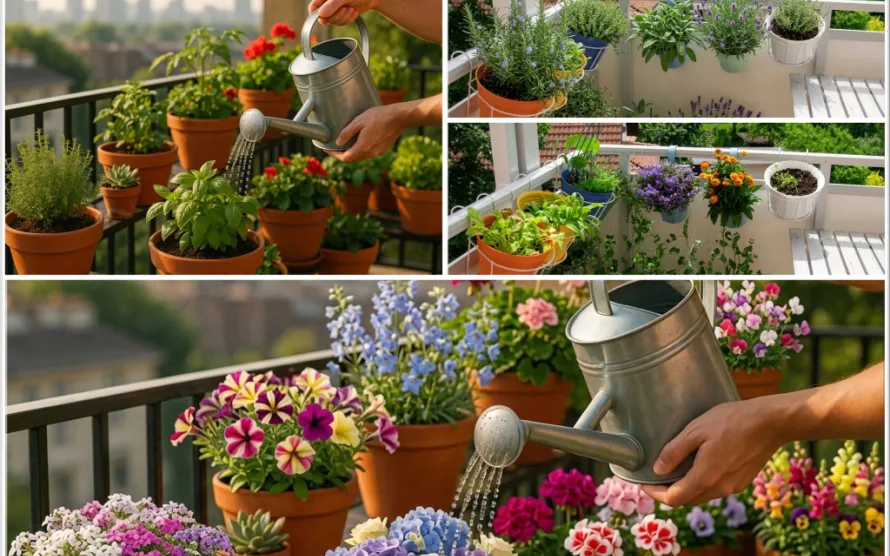
Balcony pots dry fast, then suffer when you overcorrect with a flood. Check soil often and water deeply. A small watering can with a narrow spout gives better control.
Practical Next Steps For Your First Balcony Garden
Start this week with a tiny plan. Pick one goal: fresh herbs for cooking, salad greens for lunches, flowers for color, or a calmer coffee spot. Then choose the plants that fit your light, not the plants that looked charming under perfect nursery conditions.
Buy fewer containers than you think you want. Give each plant enough root space. Use real potting mix. Water with care. Leave room for a chair.
A balcony garden grows best when you see it as a living corner of your home, not a weekend project with leaves. Start small, pay attention, and let the space teach you. The first harvest may be a handful of basil, a few strawberries, or ten quiet minutes outside. All three count.