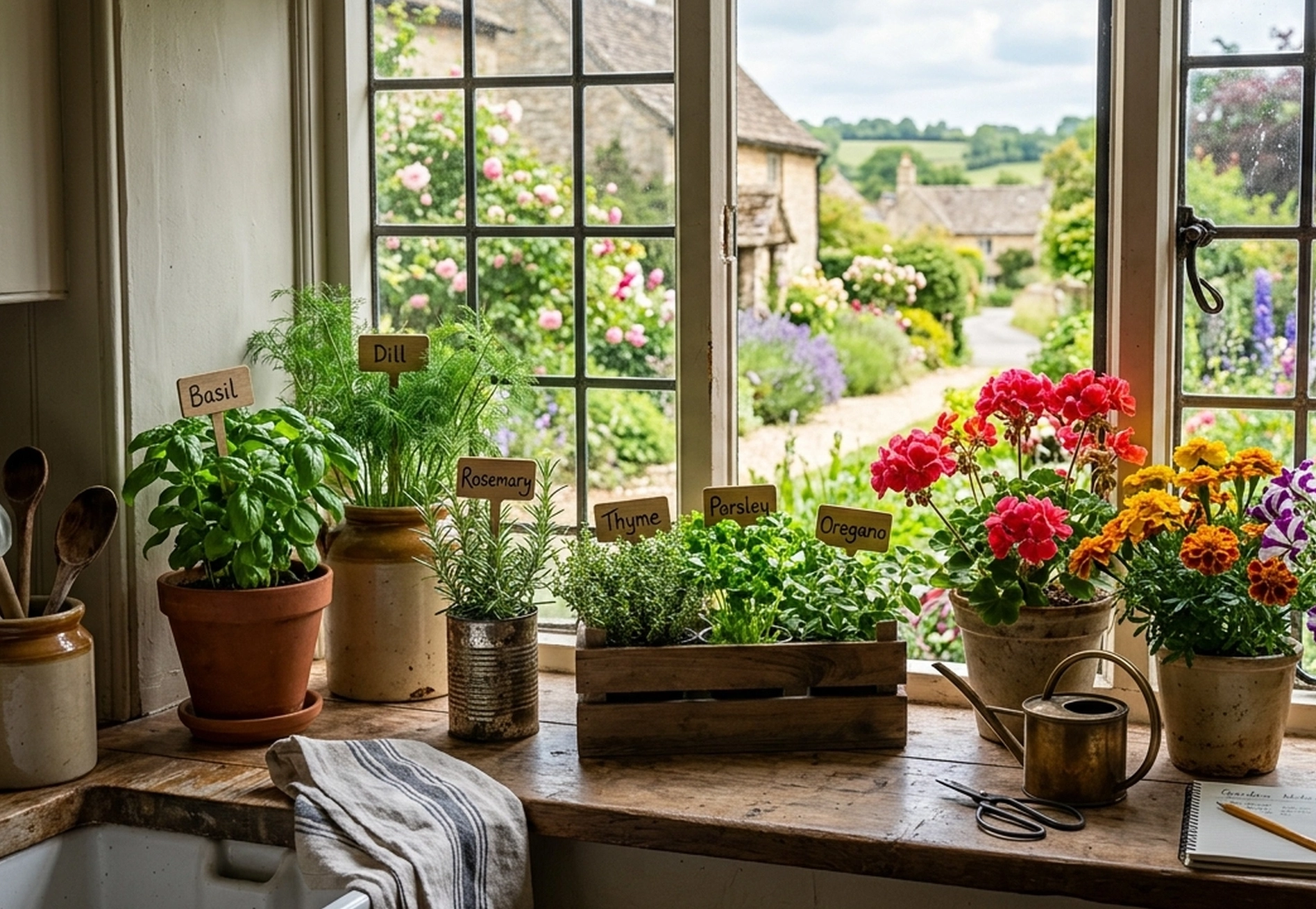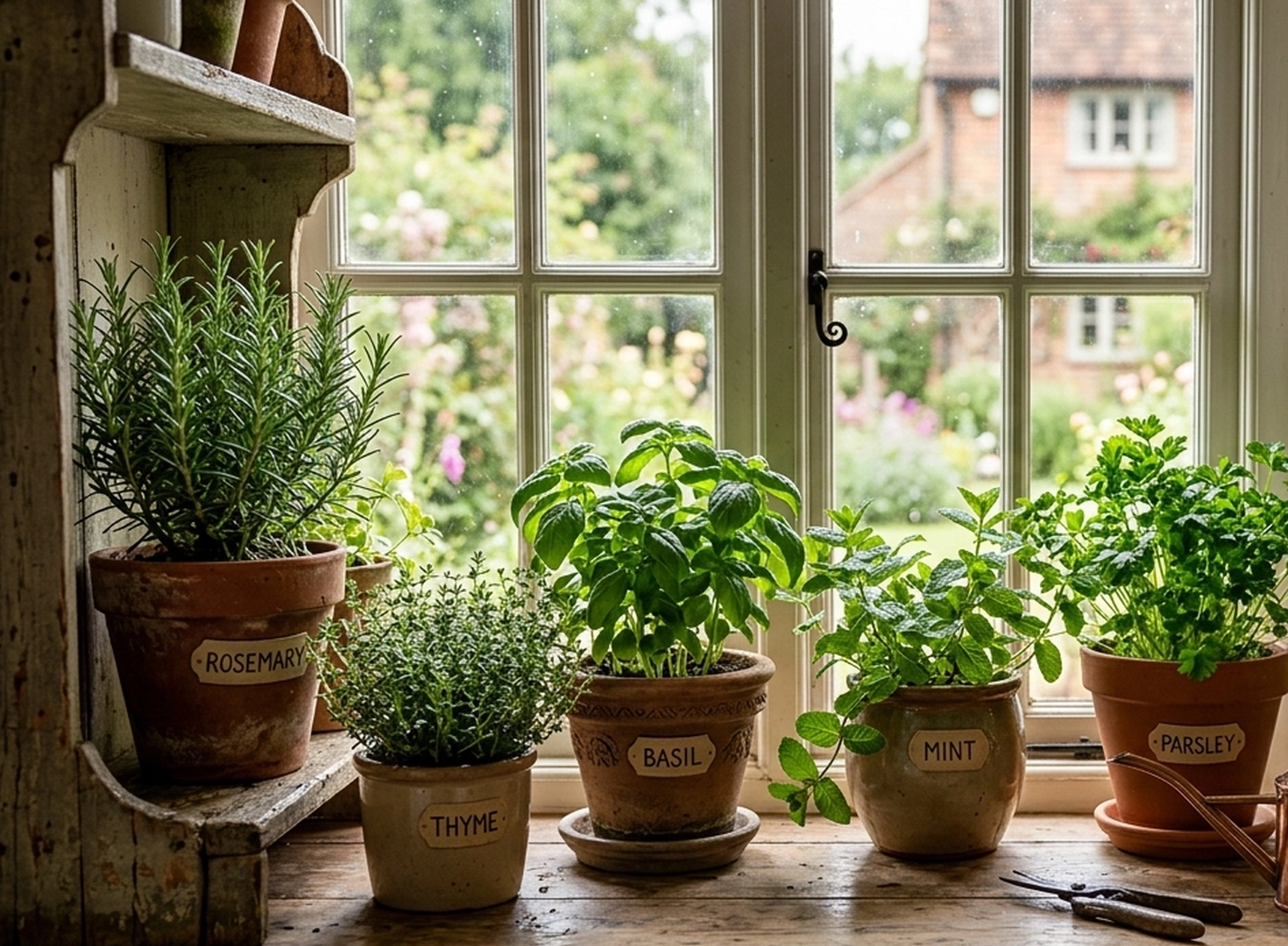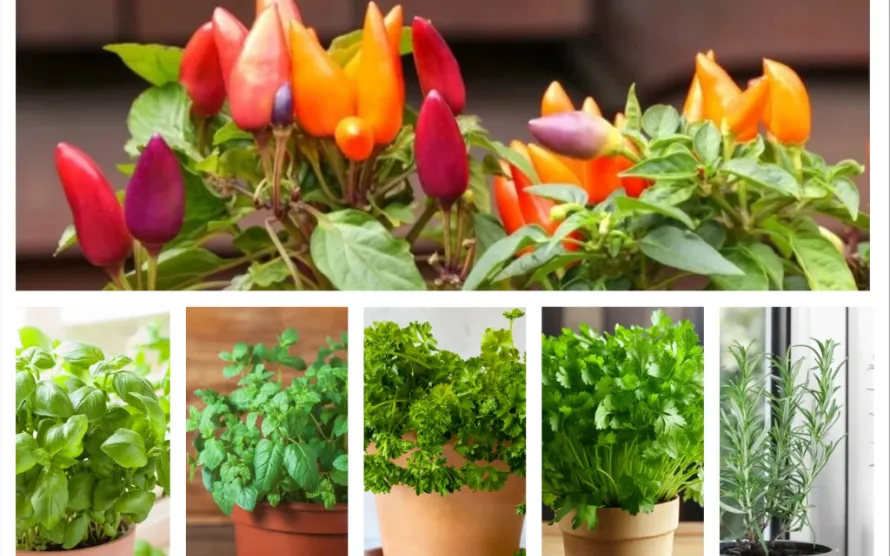
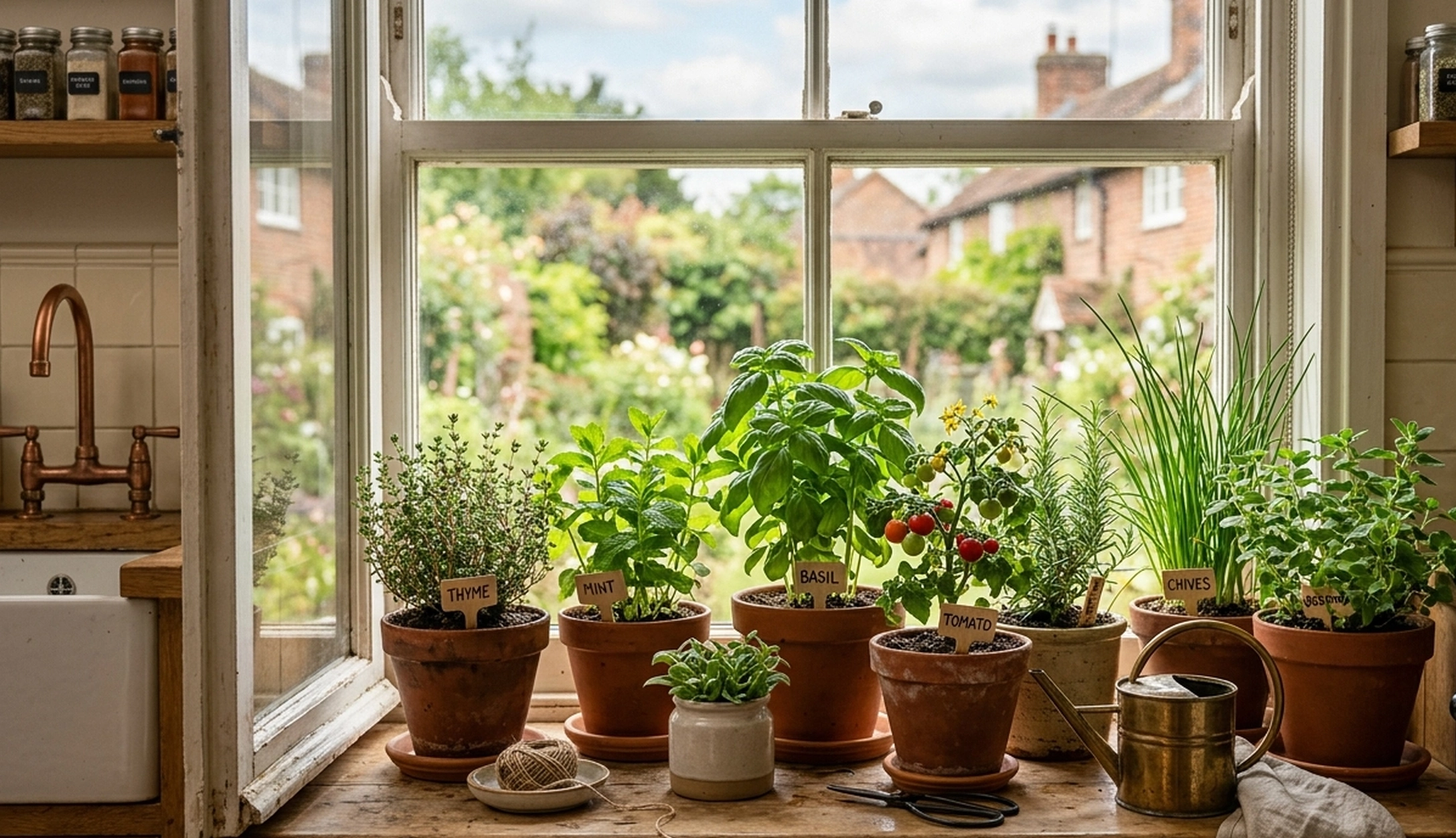
A sunny kitchen window can earn its keep. Give it a few pots, bright light, and the right windowsill herbs, and it can turn plain eggs, sleepy tea, and yesterday's soup into food that tastes planned.
Why a Kitchen Windowsill Herb Garden Works
A kitchen windowsill herb garden suits small homes, rented flats, busy schedules, and cooks who keep buying supermarket basil only to watch it collapse by Thursday. You do not need raised beds, a balcony, or a shed full of tools. You need light, drainage, the right plants, and a modest plan.
Indoor herbs also make daily cooking easier. You snip chives into scrambled eggs, pinch mint for tea, cut thyme for roasted vegetables, or rub a rosemary leaf before dinner. That tiny ritual gives the kitchen a fresher, calmer feel without asking for much space.
Start With the Window, Then Buy the Herbs
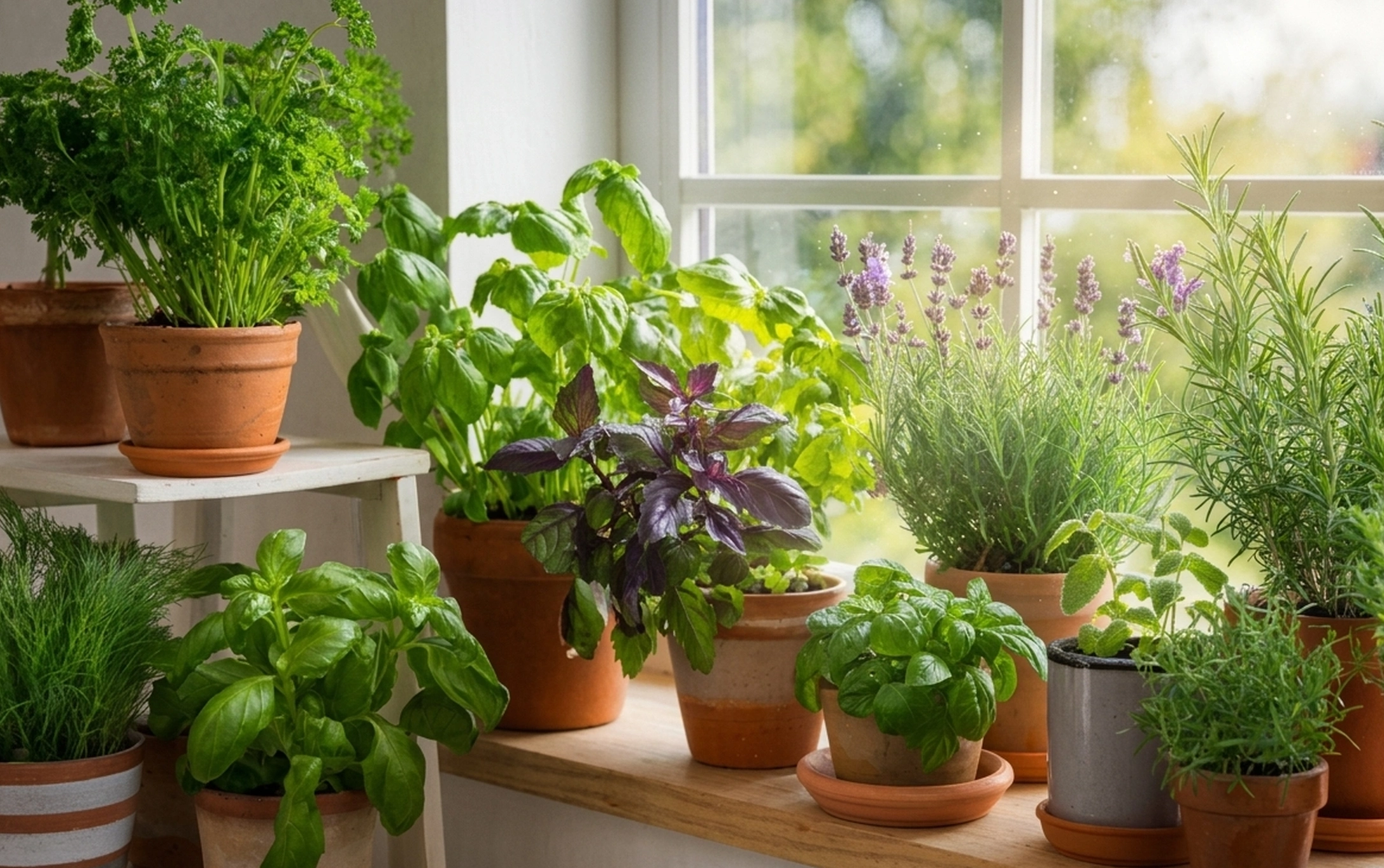
The window decides what you can grow well. Herbs may sit indoors, but they still ask for outdoor-level habits: bright light, airy roots, and soil that never turns swampy.
A south-facing window gives most indoor herb garden setups the best chance. East and west windows can also work, though growth may slow in winter. Most culinary herbs want around six to eight hours of bright light each day. In darker rooms, a compact full-spectrum grow light can keep basil from stretching into a sad green antenna.
Check Light Before You Plant
Stand at the window at midday and ask three practical questions:
- Does direct sun hit the sill for several hours?
- Can pots sit without leaves touching cold glass?
- Can you rotate each pot without moving half the kitchen?
If the answer to all three lands near yes, you have a workable spot. If the light feels weak, choose forgiving herbs like mint, chives, parsley, garden cress, or thyme before trying basil or rosemary.
Choose Pots That Protect Roots
Pretty pots sell dreams. Drainage holes save plants. Herbs dislike standing water, and indoor gardeners often kill them with kindness, one extra splash at a time.
Choose separate pots whenever space allows. Mint drinks more than thyme. Basil hates drying out too far. Rosemary wants a lighter touch. One long planter may look tidy, but it forces plants with different needs to share one watering schedule.
Use a lightweight potting mix rather than garden soil. Add perlite if the mix feels heavy. Terracotta pots help soil dry faster, which helps Mediterranean herbs such as rosemary, thyme, sage, and oregano.
The Best Herbs for a Kitchen Window
The best herbs for a kitchen window do one of three jobs: they flavor food, improve tea, or perfume the room. Some do all three, which feels like value without needing a spreadsheet.
| Herb | Best Use | Light Needs | Watering Habit | Beginner Score |
|---|---|---|---|---|
| Basil | Pasta, salads, tomatoes | High | Keep lightly moist | Medium |
| Mint | Tea, fruit, sauces | Medium | Keep evenly moist | Easy |
| Chives | Eggs, soups, potatoes | Medium | Water regularly | Easy |
| Parsley | Salads, sauces, garnish | Medium to high | Keep lightly moist | Easy |
| Thyme | Roasts, beans, vegetables | High | Let top soil dry | Easy |
| Rosemary | Potatoes, bread, baths | High | Water sparingly | Medium |
| Garden cress | Sandwiches, salads | Low to medium | Keep moist | Very easy |
| Lemon balm | Tea, desserts, scent | Medium | Keep evenly moist | Easy |
Herbs to Grow for Tea
Tea herbs turn a sill into a tiny comfort station. A few leaves can change a mug from hot water with ambition into something fragrant and useful.
Mint
Mint suits beginners because it grows fast, roots from cuttings, and forgives imperfect care. Give it its own pot. Mint likes to spread, and it will try to claim every inch of soil it can reach.
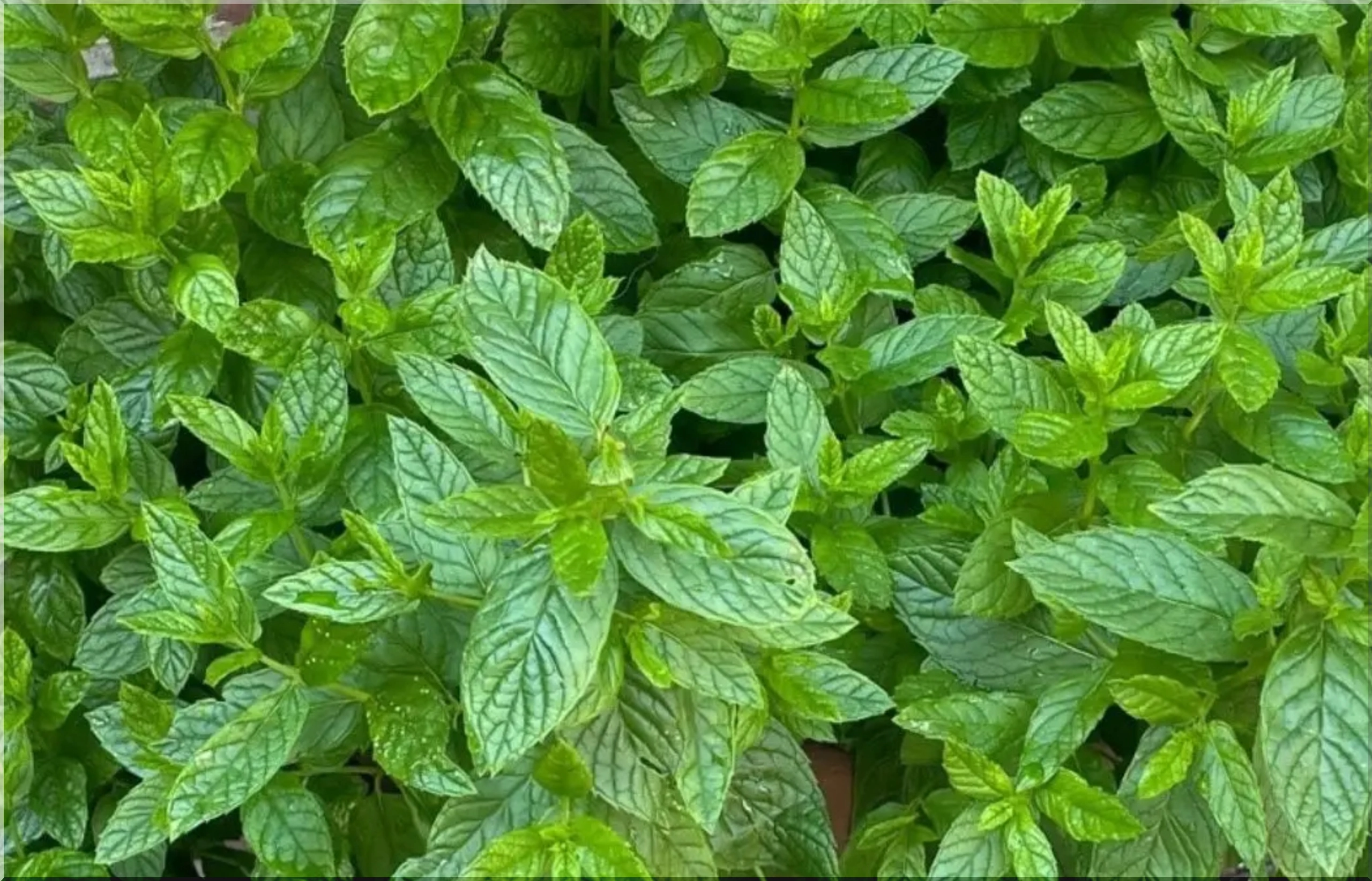
Snip stems often to keep the plant bushy. Use leaves fresh for tea, iced drinks, fruit salads, peas, yogurt sauces, or quick weekday desserts.
Lemon Balm and Chamomile
Lemon balm brings a soft citrus scent without the drama of growing citrus indoors. It grows well in pots and makes a gentle tea with a clean lemony taste. Cut the top few inches when stems get long to keep growth compact.
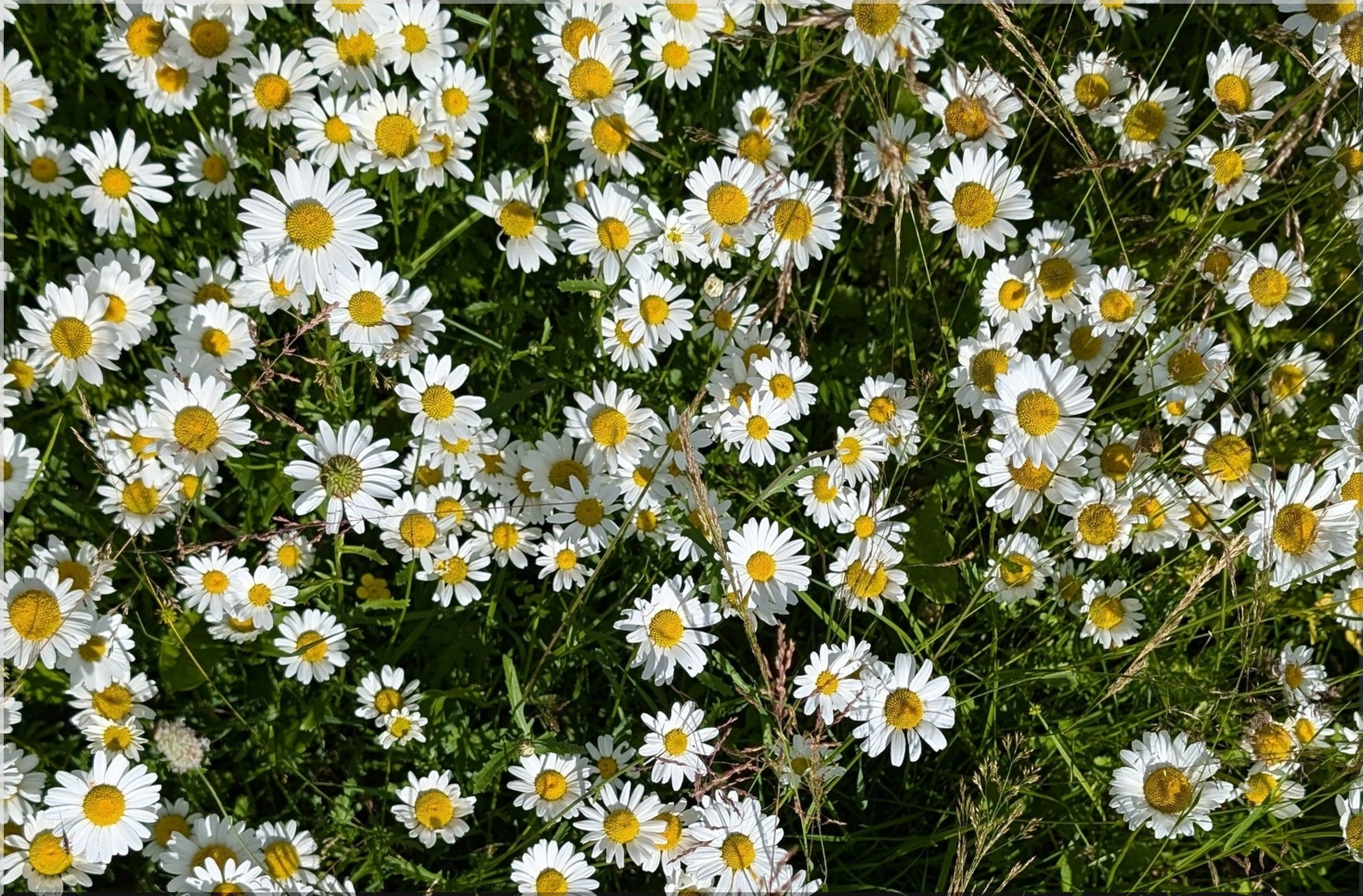
Chamomile takes more patience, but it suits anyone who wants tea flowers rather than leaves. Sow seeds on the surface of damp mix because they need light to sprout. Harvest flowers when they open fully, dry them on a clean tray, then store them away from heat and direct light.
Herbs to Grow for Food
Food herbs give you the fastest payoff. You will use them often, and you will taste the difference right away.
Basil
Basil wants warmth, light, and regular watering. It sulks in cold drafts and drops its mood fast when roots sit in water. Give it a sunny spot and pinch stems above a pair of leaves. That cut tells the plant to branch, which means more leaves for you.
Grow two basil plants if you cook with it often. One plant can vanish fast once tomatoes, pasta, and sandwiches enter the chat.
Parsley and Chives
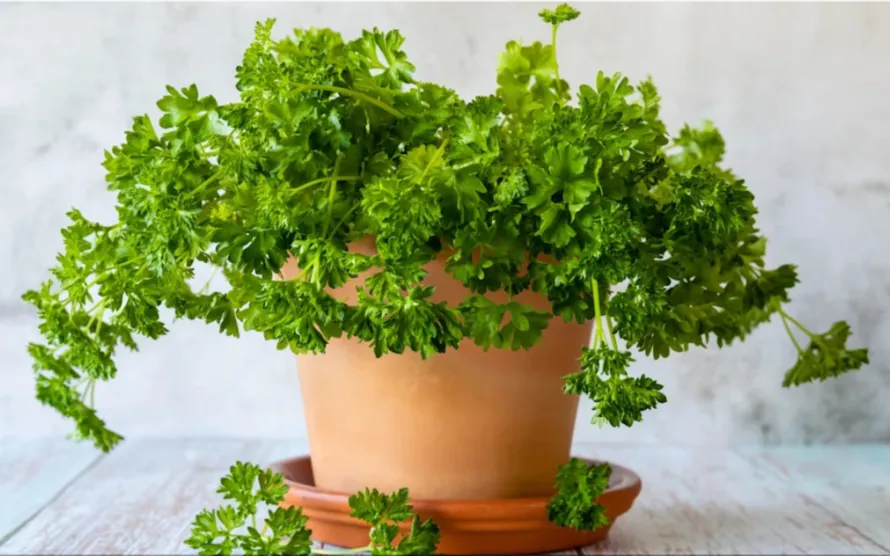
Parsley handles indoor life better than many people expect. Flat-leaf parsley gives a stronger flavor than curly parsley, but either type can work. Cut outer stems first and leave the center growth intact so the plant keeps producing.
Chives ask for little and give a lot. Cut stems near the base rather than nibbling the tips. Use chives on eggs, baked potatoes, soups, soft cheese, and salads. They bring onion flavor without making your kitchen smell like you hosted a chopping contest.
Thyme and Rosemary
Thyme likes sun, lean soil, and restraint with the watering can. It pairs well with roasted vegetables, chicken, beans, mushrooms, and bread. Clip short stems and strip the leaves.
Rosemary brings big flavor in small amounts. One plant can serve a home kitchen for months if you harvest with care. Cut whole sprigs, never more than one-third of the green growth at one time. Give it strong light, fast-draining soil, and a spot away from heating vents.
Herbs to Grow for Aroma
Scented herbs make a kitchen feel cleaner and more alive without synthetic sprays. Choose plants that suit your light and your patience level.
Lavender needs bright light, lean soil, and careful watering. It hates wet roots. If you grow it from seed, it often benefits from a cold period before sowing, so beginners may prefer a small young plant.
Scented geranium grows slower than mint but earns its pot through fragrance. Varieties can smell like rose, lemon, apple, or spice. Sage brings a savory, warm scent and strong flavor, and it prefers bright sun and drier soil.
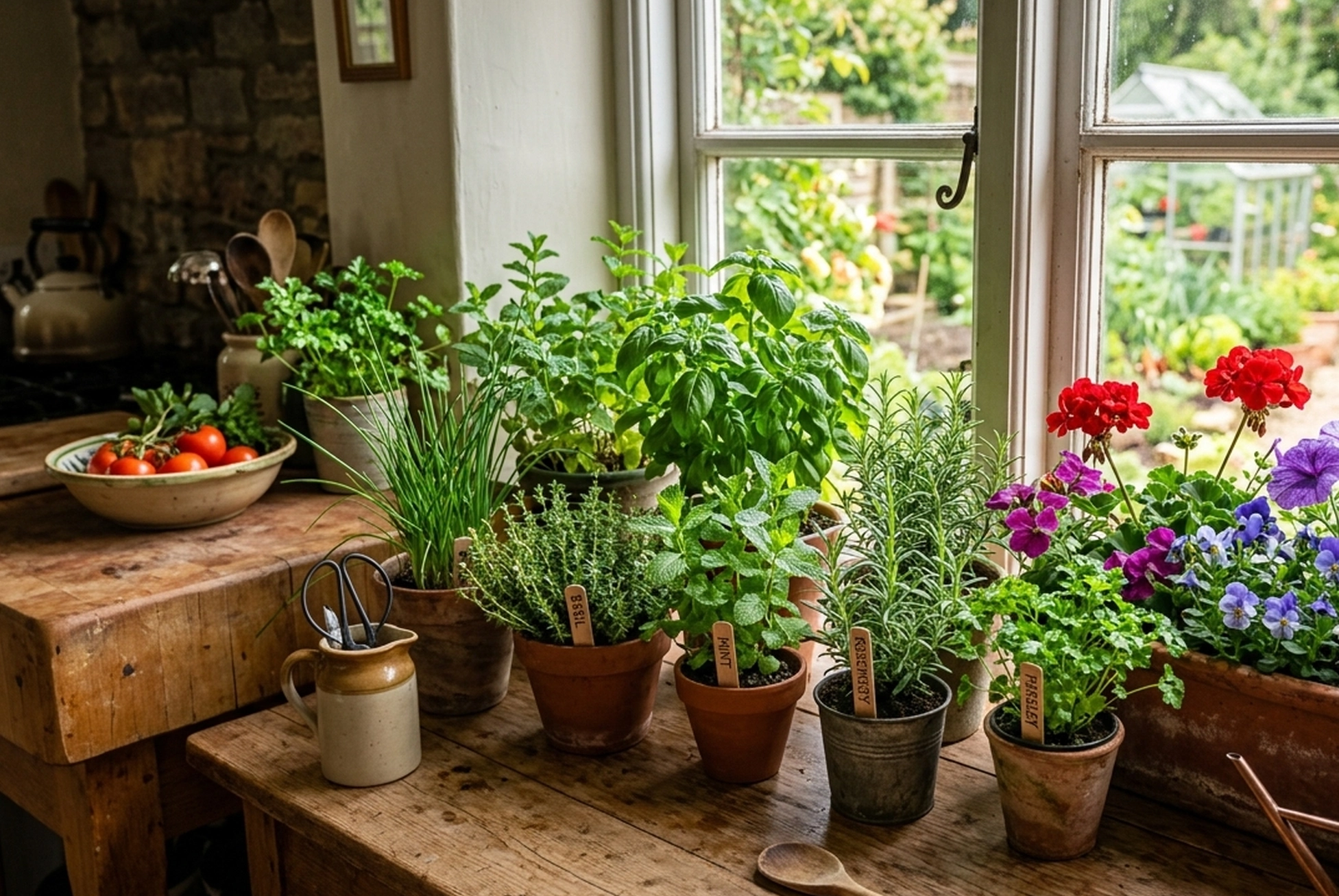
How to Plant a Windowsill Herb Garden in One Afternoon
You can start from seeds, cuttings, or young plants. Seeds cost less. Cuttings work well for mint and lemon balm. Young plants give the fastest harvest.
Follow this simple order:
- Pick the brightest window available.
- Choose three to five herbs you will actually use.
- Place each herb in its own pot with drainage holes.
- Fill pots with light, well-draining potting mix.
- Water after planting, then let excess water drain fully.
- Label each pot, because baby herbs can test anyone's confidence.
- Rotate pots every few days so stems grow evenly.
- Start harvesting lightly once plants show steady new growth.
Start small. Three healthy herbs beat nine struggling ones lined up like contestants in a very slow plant talent show.
Watering, Feeding, and Harvesting Without Guesswork
Water the soil, not the calendar. Press a finger into the top inch of mix. If it feels dry, water. If it feels damp, wait. Basil, parsley, mint, and lemon balm usually want more moisture. Thyme, rosemary, sage, and lavender prefer to dry a little between waterings.
Feed lightly during active growth. Indoor herbs do not need heavy fertilizer, and too much can dull flavor and scent. A diluted all-purpose liquid feed in spring and summer works well for many herbs. Skip heavy feeding in winter, when plants grow slowly.
Harvest often, but never strip a plant bare. Snip stems to encourage branching. For leafy herbs, take no more than one-third of the plant at a time. With fast crops like cress, harvest the patch and sow again.
Common Windowsill Herb Mistakes
Indoor herb growing rarely fails for one dramatic reason. It usually fails from a few small choices that add up.
Avoid these common traps:
- Watering every day because the pot looks lonely
- Using containers without drainage holes
- Mixing thirsty mint with dry-loving thyme in one planter
- Placing basil against cold glass in winter
- Cutting single leaves from stem herbs instead of trimming stems
- Keeping plants too far from bright light
- Ignoring aphids or spider mites until they run a small empire
When pests appear, rinse leaves gently and isolate the plant. Stronger plants resist trouble better, so good light and smart watering still do the heavy lifting.
Practical Next Steps for Your Windowsill Garden
Start with the meals and drinks you already make. If you drink tea at night, grow mint or lemon balm. If you cook eggs, potatoes, and soups, grow chives. If you roast vegetables, grow thyme or rosemary. The best windowsill herbs earn their space every week.
Buy three small pots with drainage holes, one bag of light potting mix, and three plants you will use often. Set them in the brightest safe window, water by touch, and harvest stems rather than random leaves. Your kitchen will smell better, your food will taste fresher, and your grocery bill may stop funding the weekly basil funeral.