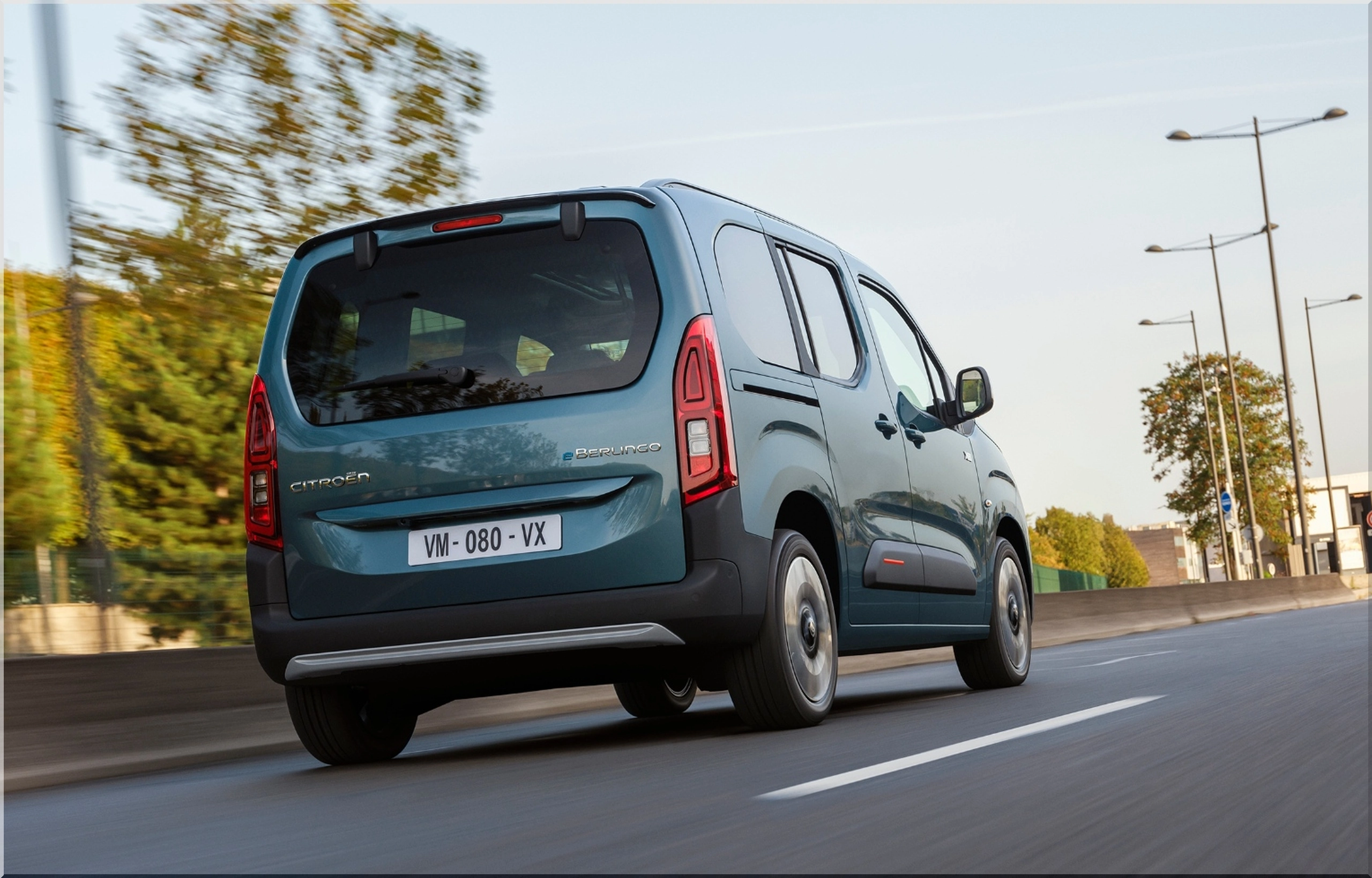
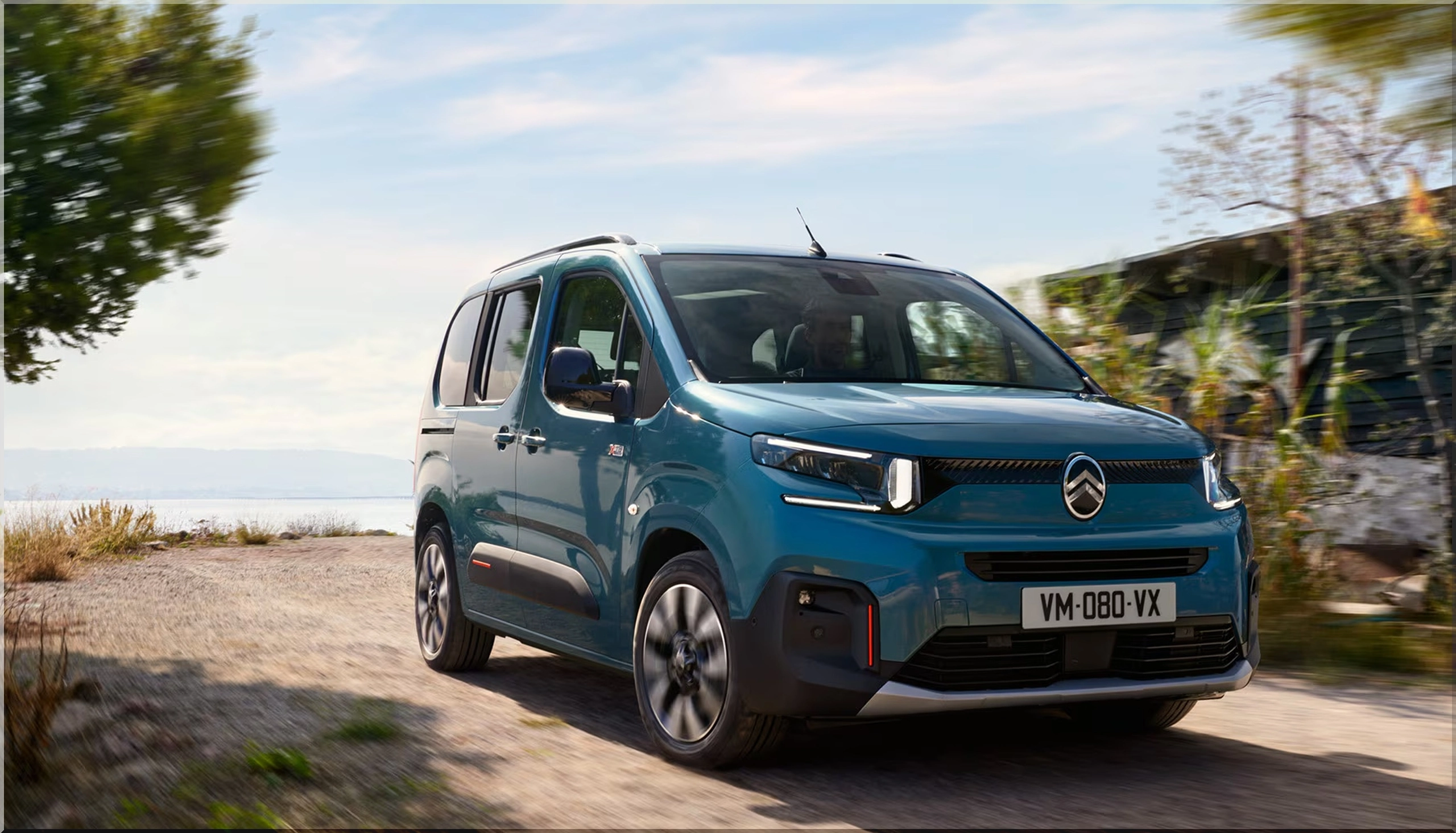
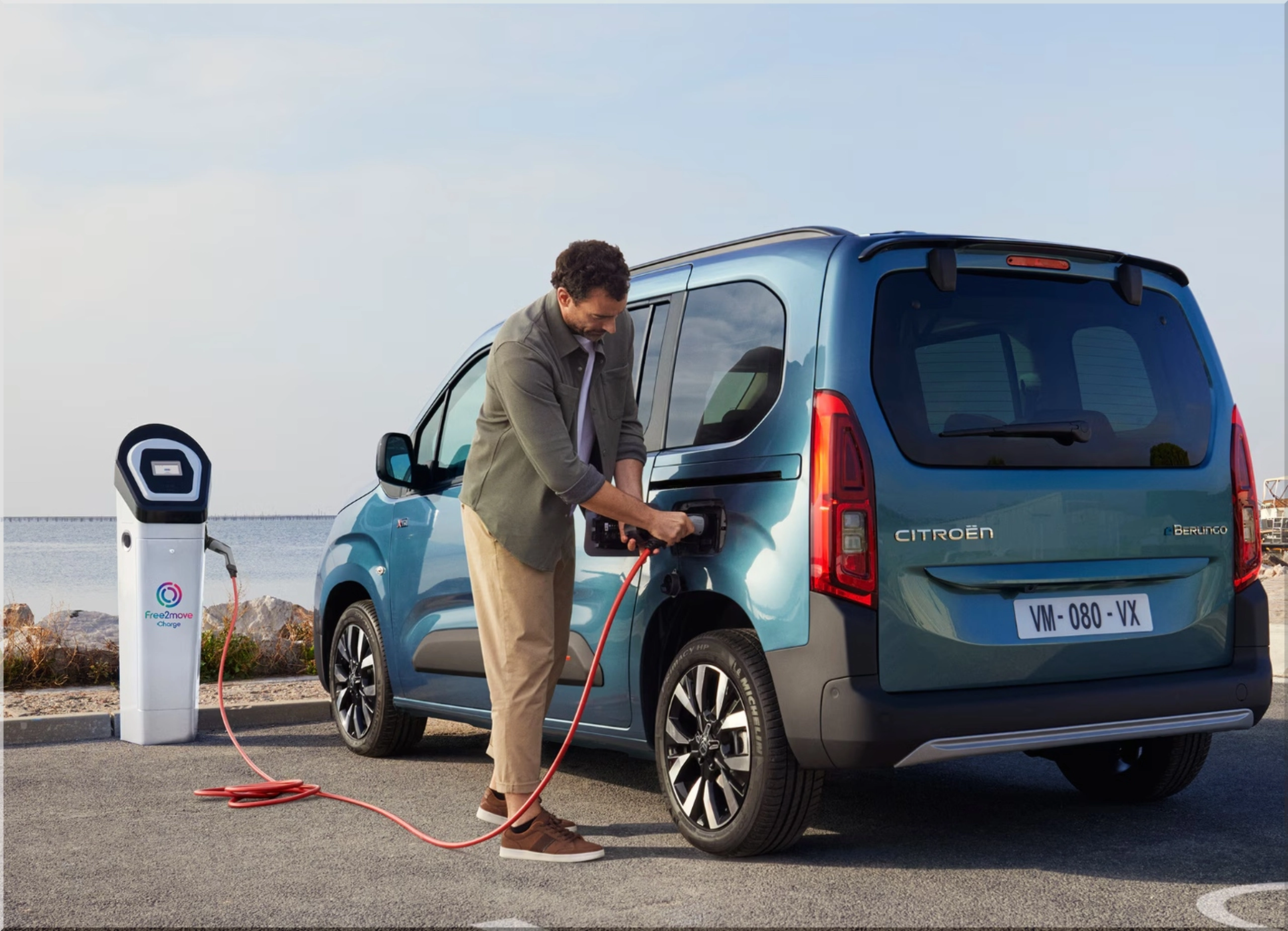
The Citroen e-Berlingo ignores the usual electric-car theatre. It skips the low roof, giant wheels, and fake sports-car posture. Instead, it carries children, pushchairs, bicycles, dogs, shopping, and the flat-pack cabinet that looked smaller under showroom lighting.
It serves families who need an electric family car with twin sliding doors, a low loading edge, a square cargo bay, and room for five or seven people. Many electric SUVs trade usable space for appearance. The Citroen spends its body volume on passengers and luggage.
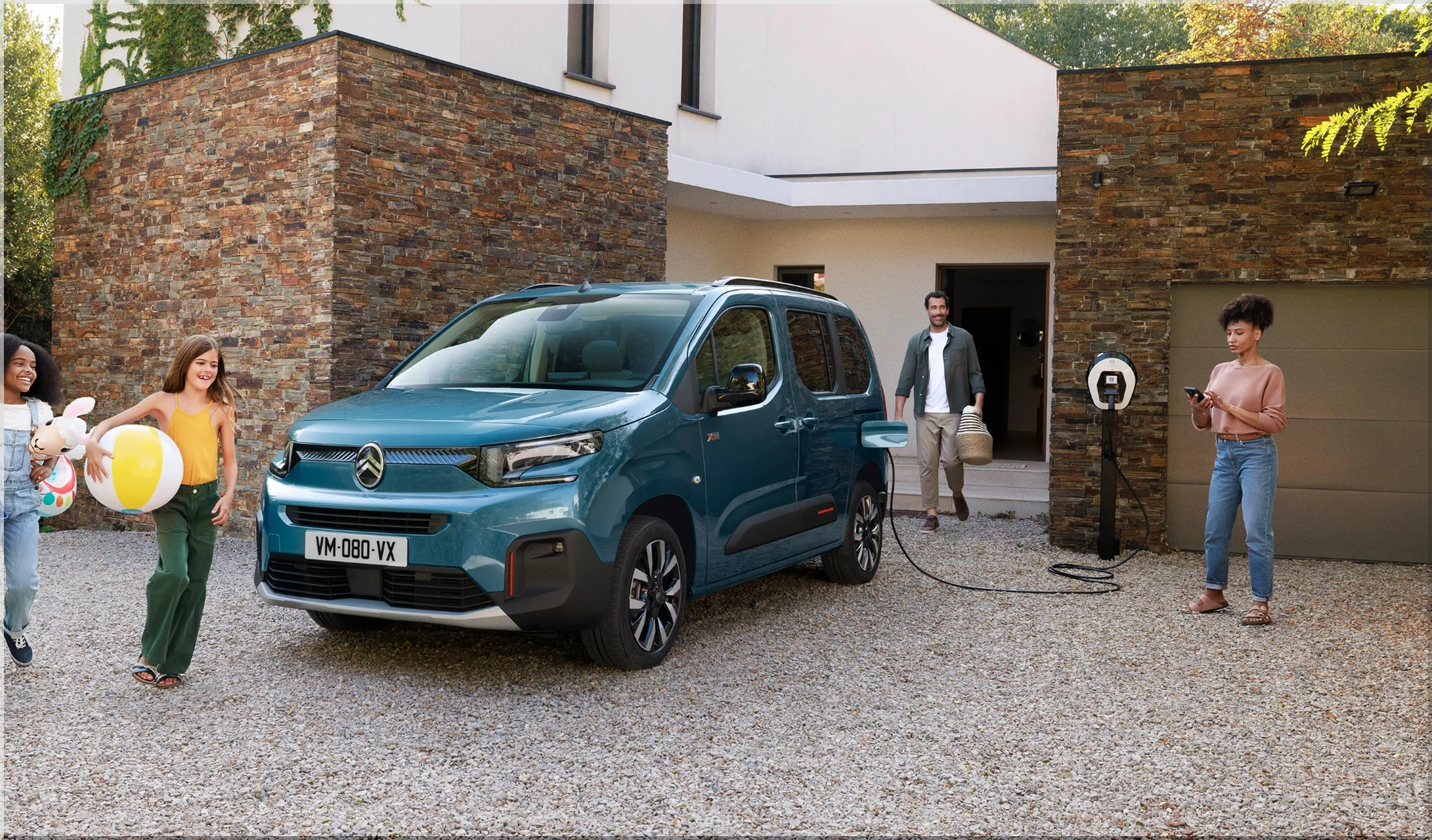
Citroen e-Berlingo Specifications
A front-mounted motor produces 100 kW, 136 hp, and 260 Nm of torque. Instant torque gives the e-Berlingo clean response in traffic and steady pull with passengers aboard. It reaches 100 km/h in about 11.5 to 11.7 seconds and tops out near 135 km/h.
| Specification | e-Berlingo M | e-Berlingo XL |
|---|---|---|
| Motor output | 100 kW / 136 hp | 100 kW / 136 hp |
| Maximum torque | 260 Nm | 260 Nm |
| Maximum WLTP range | 343 km | 337 km |
| DC charging peak | 100 kW | 100 kW |
| 0-80% DC charging | About 30 minutes | About 30 minutes |
| Length | 4,403 mm / 173.3 in | 4,753 mm / 187.1 in |
| Wheelbase | 2,785 mm / 109.6 in | 2,975 mm / 117.1 in |
| Width with mirrors | 2,107 mm / 83.0 in | 2,107 mm / 83.0 in |
| Height | 1,844 mm / 72.6 in | 1,849 mm / 72.8 in |
| Braked towing limit | 750 kg | 750 kg |
| Seats | Five | Five or seven |
Range Suits Daily Family Driving
The latest Citroen e-Berlingo range reaches up to 343 km under WLTP testing. Earlier versions returned roughly 280 km, so the current model gives owners a useful gain without forcing them to pay for a huge battery.
Citroen improved energy use through revised battery chemistry, stronger regeneration control, and better thermal management. The tall body still pushes more air than a low hatchback. Looking at the data, owners should plan around 230 to 290 km in mixed use, with motorway speed and winter heating cutting that figure.
Realistic Range Planning
- Local errands and school runs: 280 to 330 km
- Mixed urban and rural use: 250 to 300 km
- Motorway use in mild weather: 220 to 260 km
- Winter motorway use: 190 to 230 km
- Fully loaded holiday use: 180 to 220 km
Charging Works Best at Home
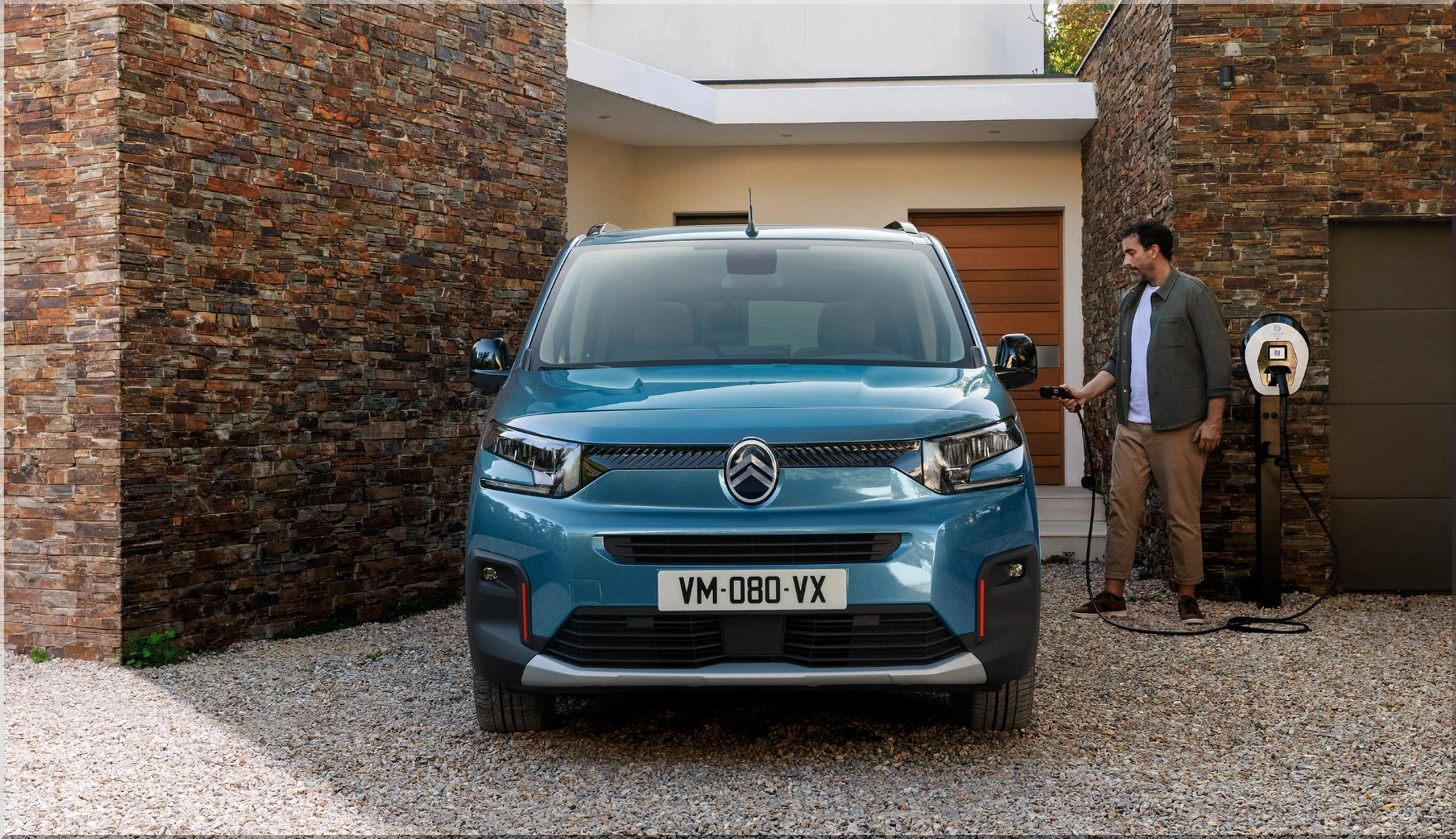
The e-Berlingo charging system accepts up to 100 kW from a DC rapid charger, taking the battery from 0% to 80% in about 30 minutes under suitable conditions. AC charging depends on the onboard unit: some versions carry a 7.4 kW charger, while selected markets offer 11 kW three-phase charging.
- 7.4 kW wallbox: about 7.5 hours
- 11 kW three-phase unit: about five hours
- 100 kW DC charger: about 30 minutes from 0% to 80%
- Domestic socket: slow backup charging
In addition, steering-wheel paddles control three regeneration levels. Eco, Normal, and Power modes adjust throttle response and energy use.
Pro-Tip: Preheat While Plugged In
Schedule charging during lower-tariff hours and heat the cabin before departure while the cable remains connected. This routine keeps more battery energy available for driving. A heat pump also reduces winter energy use compared with basic resistance heating in many conditions.
M or XL: Choose Space Before Trim
The M body measures 4,403 mm long and uses a 2,785 mm wheelbase. The XL extends length to 4,753 mm and wheelbase to 2,975 mm. That extra 350 mm changes parking effort, third-row space, luggage room, and long-item capacity.
The e-Berlingo M suits five-person households that need a large boot without moving into full-size van territory. The e-Berlingo XL suits larger families or regular third-row use. Specifically, seven occupants reduce luggage room, so a full holiday load may require roof storage or a trailer.
Choose the M for five-seat use, tighter parking, lower cost, and a 775-litre boot. Choose the XL for six or seven seats, longer equipment, camping gear, bicycles, or large dogs.
Cargo Space Defeats Most Electric SUVs
The M offers 775 litres of boot space with the rear seats in place. The XL can provide about 1,050 litres in a five-seat setup. Fold or remove the rear seating and cargo volume can rise toward 4,000 litres, depending on version.
A square opening, low sill, upright tailgate, and high roof make those figures useful. The folding front passenger seat also carries long objects, while the XL accepts items close to 3.0 metres with the seats flat. From an expert perspective, Citroen deserves credit for placing the battery below the floor without sacrificing cabin height.
Sliding Doors Earn Their Keep
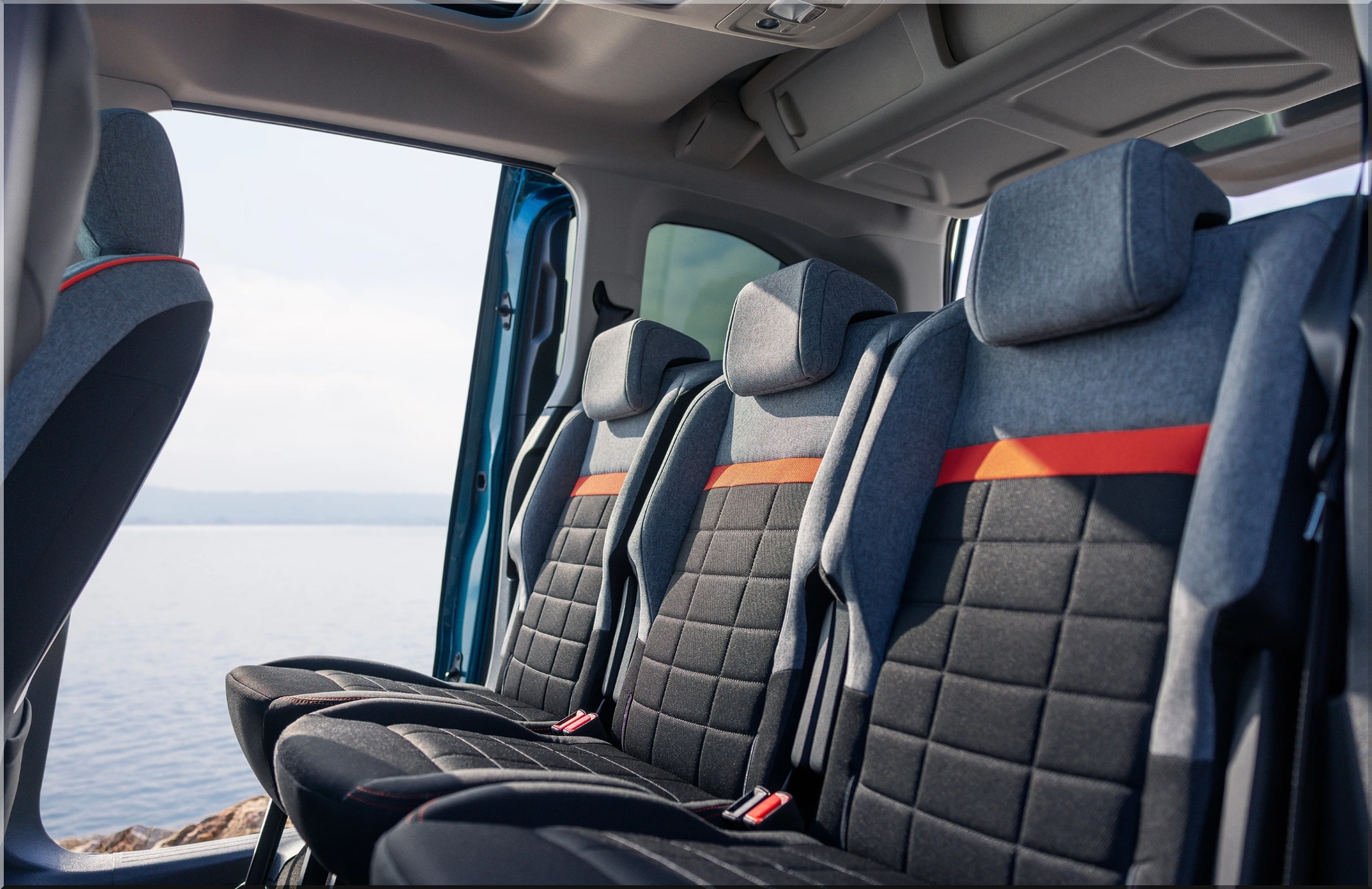
Twin sliding rear doors let children enter in narrow parking bays without striking the next car. Selected versions add three individual second-row seats and up to three ISOFIX points, while the tall roof gives adults more working space around child seats.
This setup also helps when loading a pushchair, settling a dog, fastening safety belts, or helping an older passenger. Conventional rear doors need a wide opening arc. Sliding doors need far less space and create a larger access point.
The benefit sounds ordinary. That explains why it works so well. Families deal with ordinary problems every day.
Cabin Technology Stays Practical
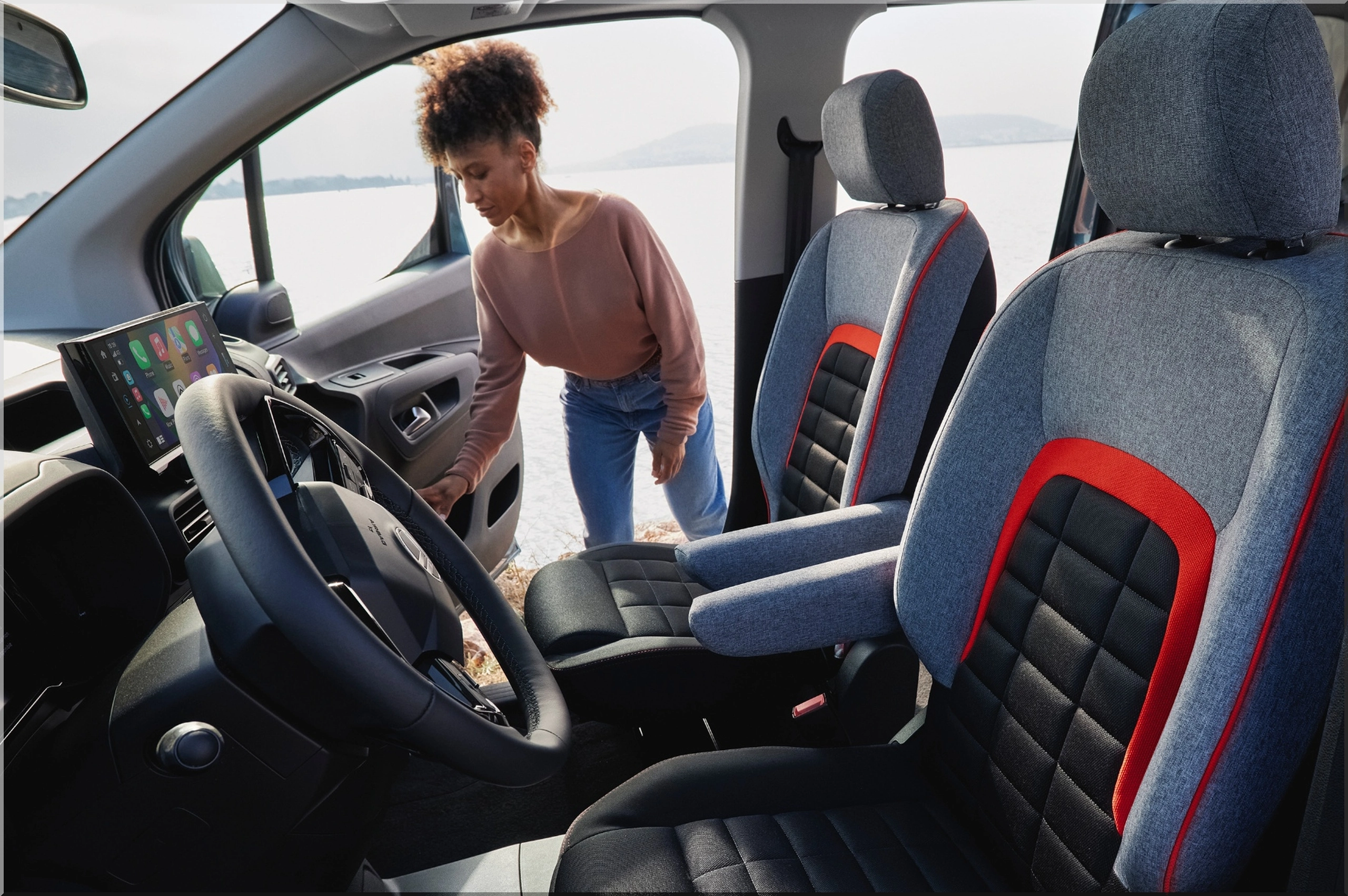
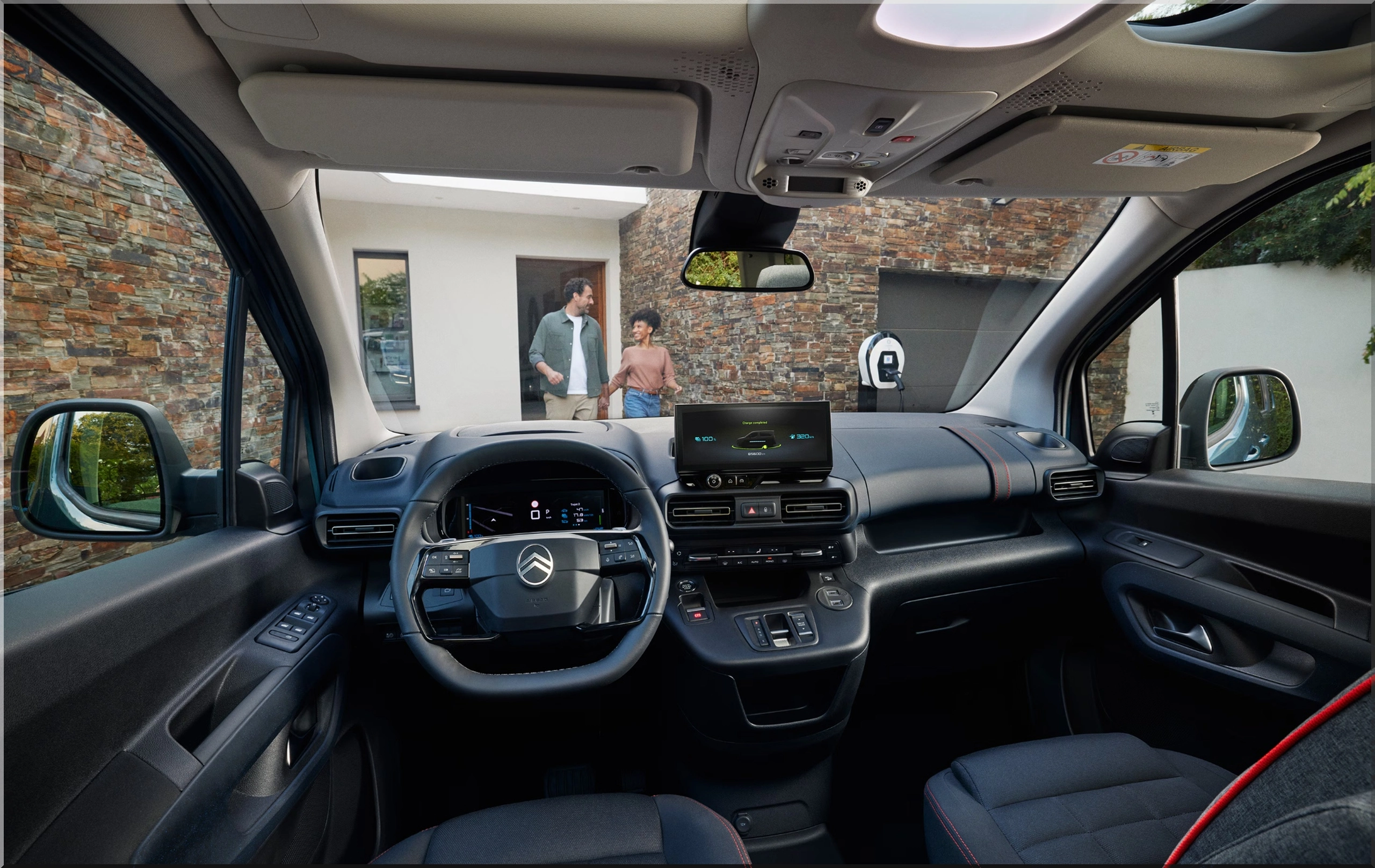
The dashboard uses a 10-inch central touchscreen. Higher trims add a 10-inch digital instrument display, while wireless Apple CarPlay and Android Auto reduce cable clutter. Connected navigation can add charging stops to longer trips.
The cabin can include up to 27 storage areas, including large door bins, overhead trays, open shelves, and seatback tables. Available systems include active emergency braking, lane keeping assistance, adaptive cruise control, parking sensors, a 180-degree reversing camera, and blind-spot monitoring. Equipment changes by trim and country.
Citroen keeps the controls relatively simple. The upright dashboard places key information high in the driver's sight line, and the broad windscreen gives a clear view ahead. Large windows also improve rear visibility for passengers.
Price and Trim Value
Indicative 2026 Dutch pricing places the range between about €41,407 and €45,627 before options. Tax systems and equipment packages change across Europe, but the figures show the premium attached to the longer body and higher trim.
| Version | Seats | WLTP range | Braked towing | Indicative price |
|---|---|---|---|---|
| Plus M | 5 | 343 km | 750 kg | €41,407 |
| Max M | 5 | 339 km | 750 kg | €43,807 |
| Plus XL | 5 or 7 | 337 km | 750 kg | €43,227 |
| Max XL | 5 or 7 | 335 km | 750 kg | €45,627 |
The Plus M gives the strongest value for five-seat buyers. The Plus XL adds floor length and optional rear seats. Max adds technology and driver aids, though larger wheels can cut range and raise tyre cost.
Consequently, choose the body before the wheel design. Paint affects the driveway. Body length affects every school run.
Citroen e-Berlingo Versus Electric MPV Rivals
The e-Berlingo competes with the Peugeot E-Rifter, Opel Combo Electric, and Renault Kangoo E-Tech Electric. The Peugeot and Opel share major electrical hardware with the Citroen, so price, seat design, warranty terms, dealer support, and standard equipment decide much of the result.
| Model | Motor | Maximum WLTP range | DC peak | Seats |
|---|---|---|---|---|
| Citroen e-Berlingo | 100 kW | 343 km | 100 kW | 5 or 7 |
| Peugeot E-Rifter | 100 kW | 343 km | 100 kW | 5 or 7 |
| Opel Combo Electric | 100 kW | 345 km | 100 kW | 5 or 7 |
| Renault Kangoo E-Tech | 90 kW | 285-300 km | Up to 80 kW | 5 |
By comparison, the Citroen usually wins through value and simple usability. The Peugeot can feel richer inside, while the Opel may post a small range gain in selected trims. The Renault offers clever storage but gives away range and rapid-charging speed.
The small differences between the Citroen, Peugeot, and Opel make local pricing important. A dealer discount, better standard equipment, or shorter delivery period can carry greater value than a two-kilometre range advantage.
Running Costs Depend on Charging Habits
Assume 15,000 km per year, electricity use of 18.5 kWh per 100 km, and a home tariff of €0.30 per kWh. Annual energy spending lands near €833. A diesel family van using 6.0 litres per 100 km at €1.70 per litre costs about €1,530 across the same distance.
That creates an energy gap of about €697 per year in favour of home charging. Public rapid charging can reverse the result. At €0.65 per kWh, annual electricity spending rises to about €1,804.
Home charging therefore carries greater financial value than a small purchase-price discount. Regular rapid-charger use also adds waiting time, while overnight charging lets the driver start each morning with a full battery.
Maintenance should cost less than comparable diesel upkeep because the electric motor uses fewer wearing components. Owners still need to budget for tyres, brakes, suspension parts, cabin filters, battery coolant checks, and routine inspections.
Pro-Tip: Price the Charging Plan First
Check the home-charger installation cost, electricity tariff, public-network rate, insurance quote, and annual mileage before choosing a trim. A lower charging tariff can save more money than a discounted wheel package.
Drivers should also check off-peak charging plans. Moving most charging to cheaper night-time hours can cut annual running costs without changing driving habits.
Can the Citroen e-Berlingo Replace a Family SUV?
For many households, yes. The Citroen e-Berlingo carries more luggage, provides easier rear-seat access, and offers greater roof height than most similarly priced electric SUVs. It also gives buyers optional seven-seat capacity in XL versions.
An SUV may deliver sharper handling, lower wind noise, and a more polished cabin. The Citroen answers with sliding doors, removable seating, a broad cargo floor, and far better space efficiency.
The decision comes down to priorities. Buyers who value appearance and faster motorway performance may prefer a crossover. Buyers who regularly carry people and equipment will gain far more from the e-Berlingo's packaging.
Who Should Buy the Citroen e-Berlingo?
The Citroen e-Berlingo electric MPV suits families that travel fewer than 200 km on most days, charge at home, and value access over image. It also suits dog owners, cyclists, carers, small-business users, and buyers who carry bulky gear.
Drivers who cover 400 km motorway trips every week may prefer a larger battery. Buyers who tow above 750 kg also need another vehicle. The e-Berlingo states its limits clearly.
For the right household, it delivers compact-road manners, huge interior space, quiet low-speed driving, sensible rapid charging, and seven-seat availability. It does the work. That remains a stronger sales argument than another glowing badge stretched across a dashboard.