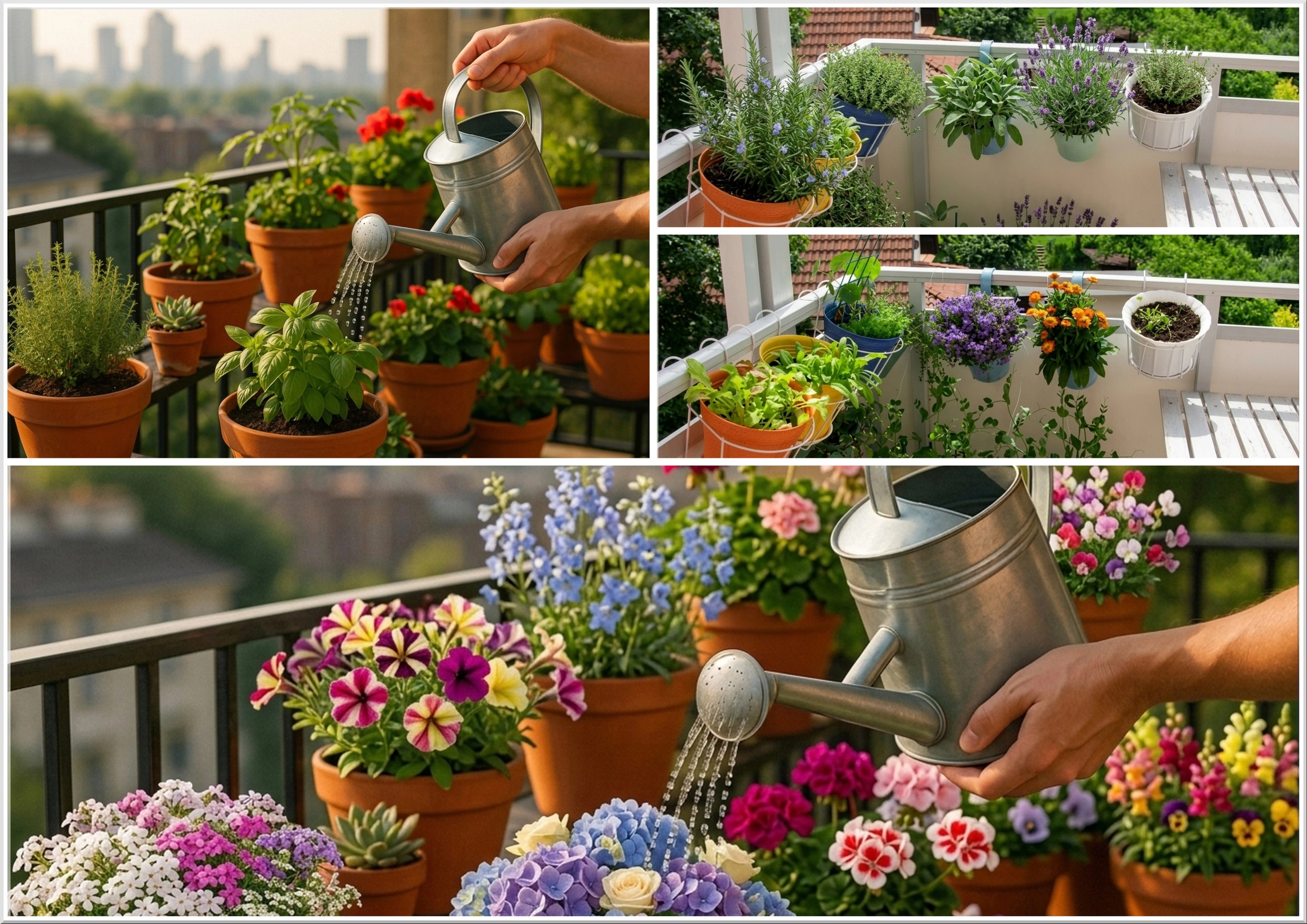
Balcony plants have a flair for mixed signals. Drooping leaves may ask for water, or they may signal roots sitting in soggy soil. The solution does not involve a rigid calendar. It starts with checking the soil, reading each plant, and watering slowly enough for moisture to reach the full root zone.
Why Balcony Plants Need a Different Watering Routine
Plants growing in garden beds can send roots through a large volume of soil. Balcony plants live inside containers with limited soil, restricted root space, and rapid moisture swings.
Sun-warmed walls, concrete floors, metal railings, and reflective windows can raise temperatures around pots. Wind pulls moisture from leaves and soil. Small containers may dry within hours on a hot day, while large glazed pots nearby may stay damp for several days.
A roof or balcony above may also block rain. A passing shower can wet the leaves without adding meaningful moisture to the potting mix.
This creates a simple rule: water balcony plants according to soil conditions, not assumptions about the weather.
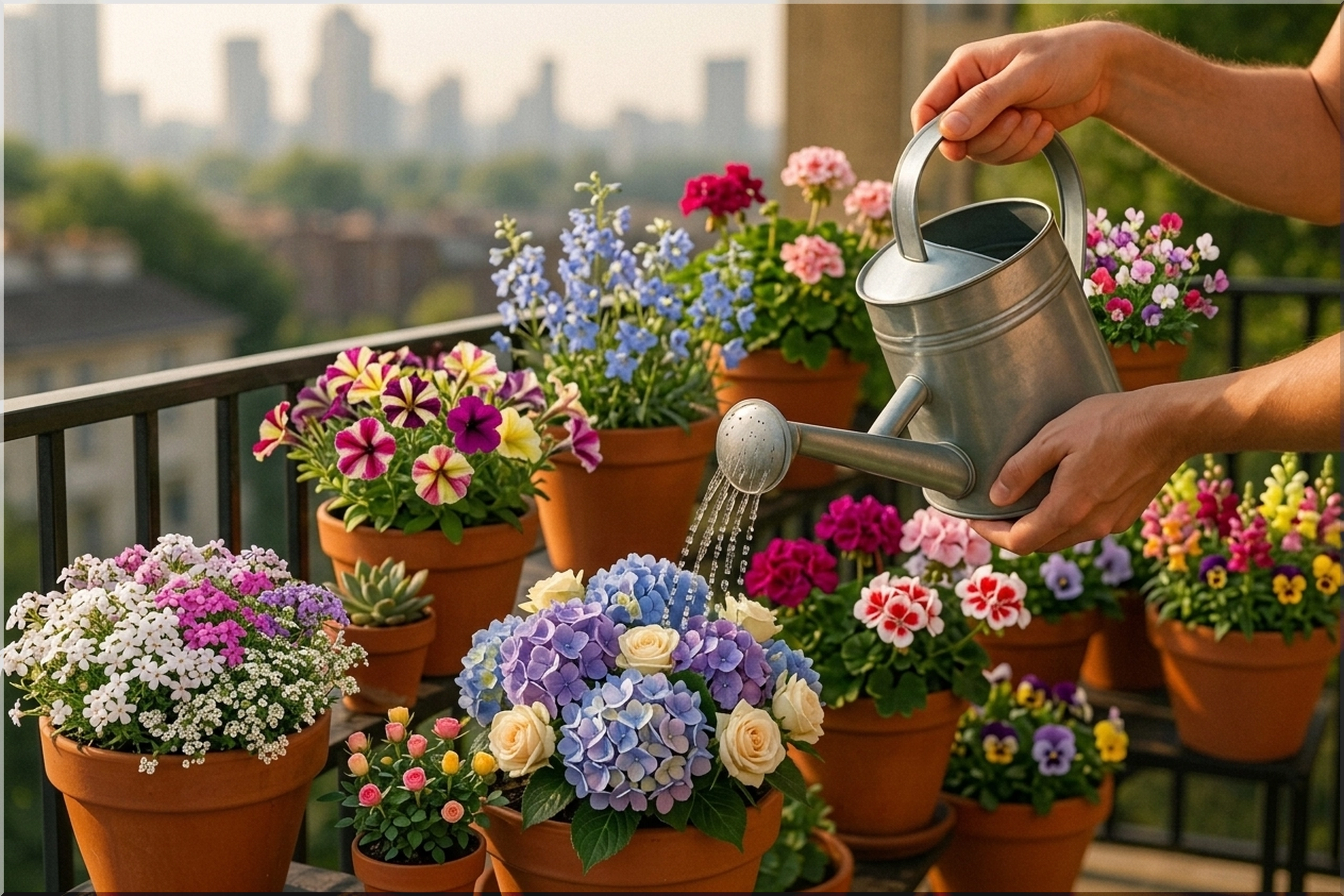
How to Tell When Balcony Plants Need Water
A plant should earn its drink. Before reaching for the watering can, check what is happening below the surface.
Use the Finger Test
Push a finger about one inch into the potting mix. If the soil feels dry at that depth, most common balcony flowers, herbs, and vegetables need water. If it still feels cool and damp, check again later.
This test works well for medium and large containers. It may prove less useful with succulents or plants that prefer deeper drying, so learn the needs of each species.
Lift Smaller Pots
Pick up a small container after watering and notice its weight. Lift it again as the soil dries. The difference soon becomes easy to recognize.
This method offers a quick moisture check without disturbing the roots. It works very well with hanging baskets, herbs, and lightweight nursery pots.
Read the Plant Without Trusting It Blindly
Thirsty plants often develop limp leaves, dry edges, or slow growth. Yet overwatered plants can wilt too. Wet roots struggle to access oxygen, which leaves the upper plant looking tired.
Check the soil before responding to drooping leaves.
Common clues include:
- Dry soil and limp leaves: The plant probably needs water.
- Wet soil and yellow lower leaves: The roots may be receiving too much water.
- A sour smell from the pot: The mix may remain wet for too long.
- Brown, crisp leaf edges: Heat, wind, or repeated drying may be responsible.
- Water racing down the pot's sides: The mix may have become very dry and resistant to absorption.
One symptom rarely tells the whole story. Soil moisture provides the missing clue.
How Often Should You Water a Balcony Garden?
No universal balcony garden watering schedule works in every space. Season, weather, pot size, plant type, and balcony direction all change the answer.
Use this table as a starting point, then adjust after checking the soil.
| Balcony condition | Likely checking frequency | What to watch |
|---|---|---|
| Hot, sunny, and windy | Once or twice daily | Small pots drying within hours |
| Sunny but sheltered | Daily | Warm containers and thirsty crops |
| Part sun or morning sun | Every one to two days | Uneven drying between pots |
| Shaded and protected | Every two to four days | Soil staying damp too long |
| Cool spring or autumn weather | Every two to three days | Slower growth and lower water use |
Checking frequency does not equal watering frequency. A daily check may lead to watering one tomato plant while leaving a rosemary pot alone.
During a heatwave, tomatoes, cucumbers, petunias, and hanging baskets may need water every day. Tiny pots may need a second check late in the afternoon. Succulents, lavender, and Mediterranean herbs usually prefer more drying time.
The Best Way to Water Balcony Plants
A quick splash wets the surface and creates the comforting appearance of responsible gardening. Roots remain unimpressed.
Proper watering moistens the full root area. It also gives dry potting mix enough time to absorb water instead of sending it directly through gaps around the container.
Follow this routine:
- Check the soil first. Test several pots rather than assuming every plant needs the same care.
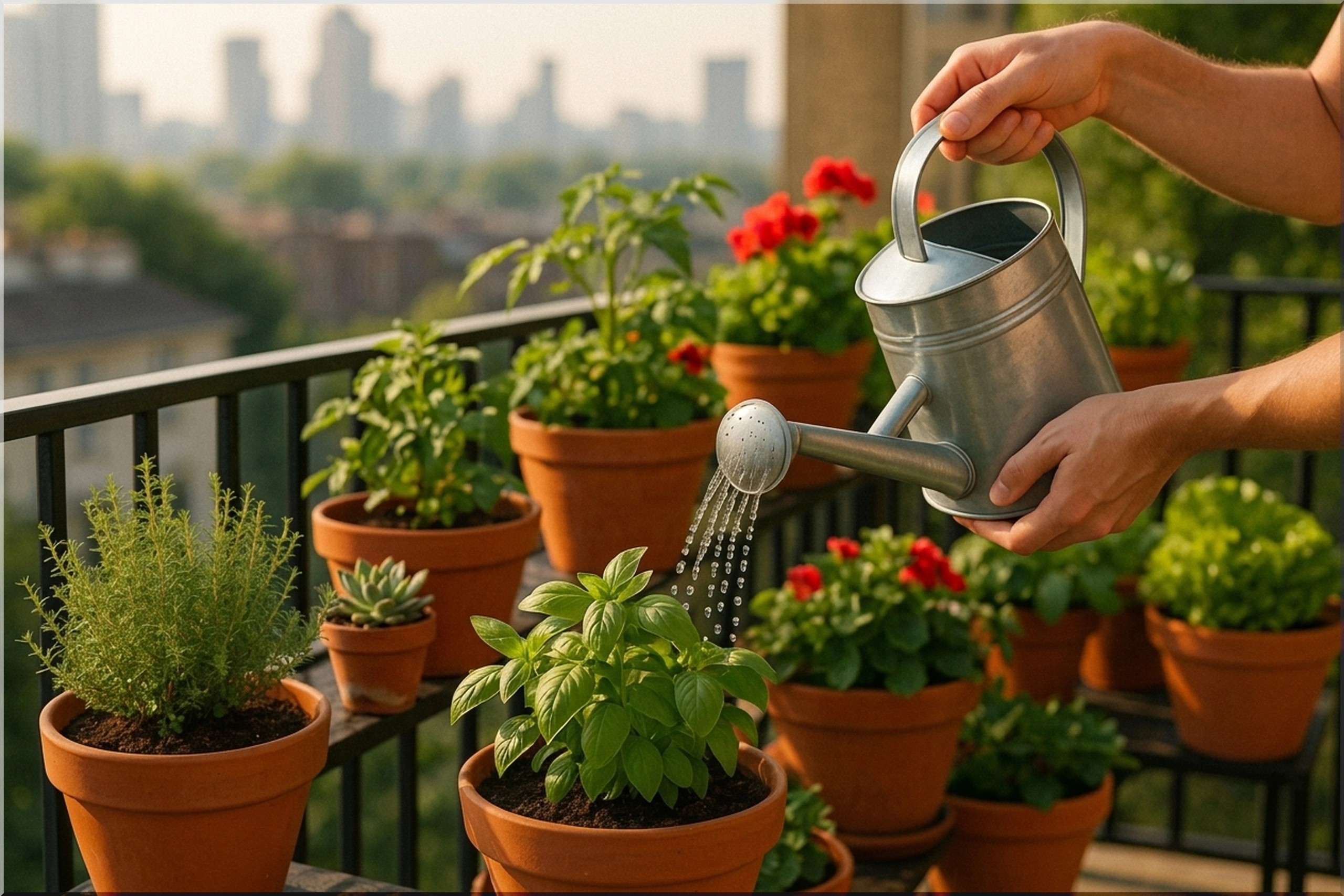
- Aim at the potting mix. Keep the stream near the base of the plant.
- Pour slowly. Give the mix time to absorb each pass.
- Water the full surface. Moving around the pot prevents dry pockets.
- Pause if water runs through immediately. Wait a minute, then water again.
- Stop after a little water reaches the drainage tray. This shows that moisture has passed through the root area.
- Empty standing water later. Do not leave ordinary pots soaking for hours.
Watering in two slow passes works well when soil has dried heavily. The first pass softens the mix. The second reaches areas that the first missed.
Why Morning Watering Usually Works Best
Morning gives roots access to moisture before midday heat increases water loss. Cooler conditions also make the job more pleasant for the gardener, which counts for quite a lot at 7 a.m. with a watering can in one hand and coffee in the other.
Evening watering can work when mornings feel impossible. Aim water at the soil and avoid soaking foliage overnight. Constantly damp leaves may support fungal problems in crowded spaces with weak airflow.
Midday watering will not magically scorch every leaf. Still, strong heat can increase evaporation and make watering less efficient. During an urgent heatwave, water a dry plant when it needs help rather than waiting for a perfect hour.
How to Stop Water Dripping Onto Neighbors
A healthy balcony garden should not create surprise rain for the apartment below. Good runoff control protects neighbors while allowing pots to drain properly.
Match Every Pot With a Suitable Saucer
Choose a saucer wide enough to catch water from every drainage hole. Place pot feet or small supports inside a deep tray when a container needs added clearance.
Empty the saucer after drainage finishes. Roots sitting in water for long periods face a higher risk of decay. Standing water may also attract mosquitoes in warm regions.
Slow the Flow
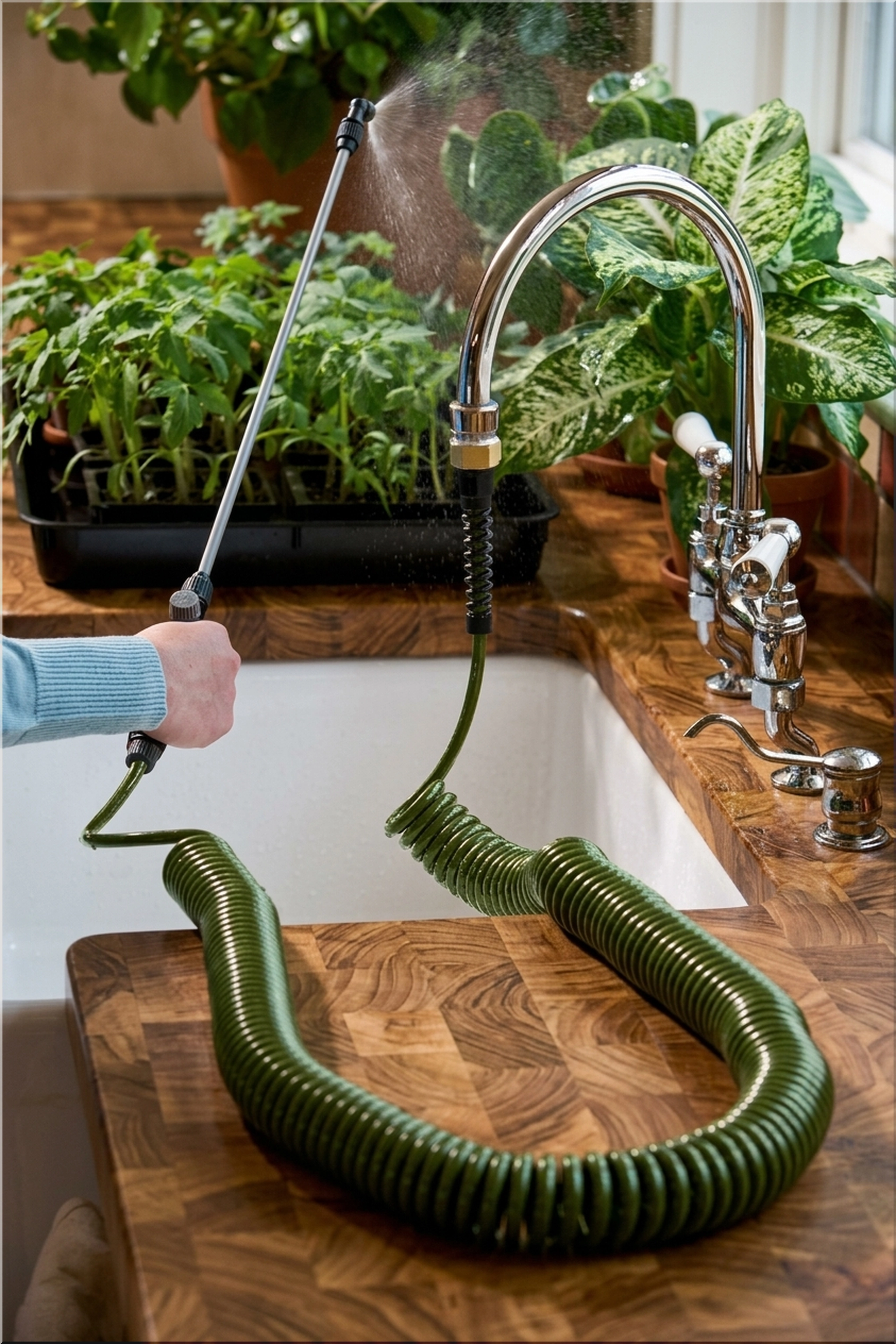
Fast pouring creates overflow before dry soil can absorb the water. Use a narrow-spout can, squeeze bottle, or gentle watering wand. Apply a small amount, pause, and continue.
For very dry pots, move them to a sink, bathtub, or plastic basin when practical. Water thoroughly, allow them to drain, and return them to the balcony.
Create a Watering Station
Group smaller containers inside a broad waterproof tray. You can water them there and remove any collected runoff with a sponge, cup, or small wet vacuum.
A watering station works well for balconies with solid floors and strict building rules. It also keeps loose potting mix and fallen leaves in one manageable area.
Pro-Tip: Do not block drainage holes to stop drips. Catch the runoff after it leaves the pot. Roots still need drainage and air.
Choose Containers That Make Watering Easier
The container affects how quickly soil dries. Pot size, color, material, and drainage deserve as much attention as the plant itself.
Terracotta allows moisture to pass through its porous walls. It suits plants that prefer drier conditions, but it demands closer attention during hot weather. Plastic and glazed ceramic retain moisture longer. Dark containers absorb more heat in direct sun.
Large pots hold a steadier supply of moisture than small ones. They also protect roots from rapid temperature changes. If a thirsty tomato lives in a tiny decorative pot, the tomato will win every argument about sizing.
Every standard container needs open drainage holes. Decorative outer pots can hide functional nursery pots, but trapped runoff must not stay around the roots.
Use potting mix for container plants rather than soil taken from the ground. Garden soil often compacts inside pots, drains poorly, and limits airflow.
Group Plants by Their Water Needs
Random plant placement makes watering harder than it needs to be. Put thirsty plants near each other and keep drought-tolerant plants in a separate group.
Useful groups may include:
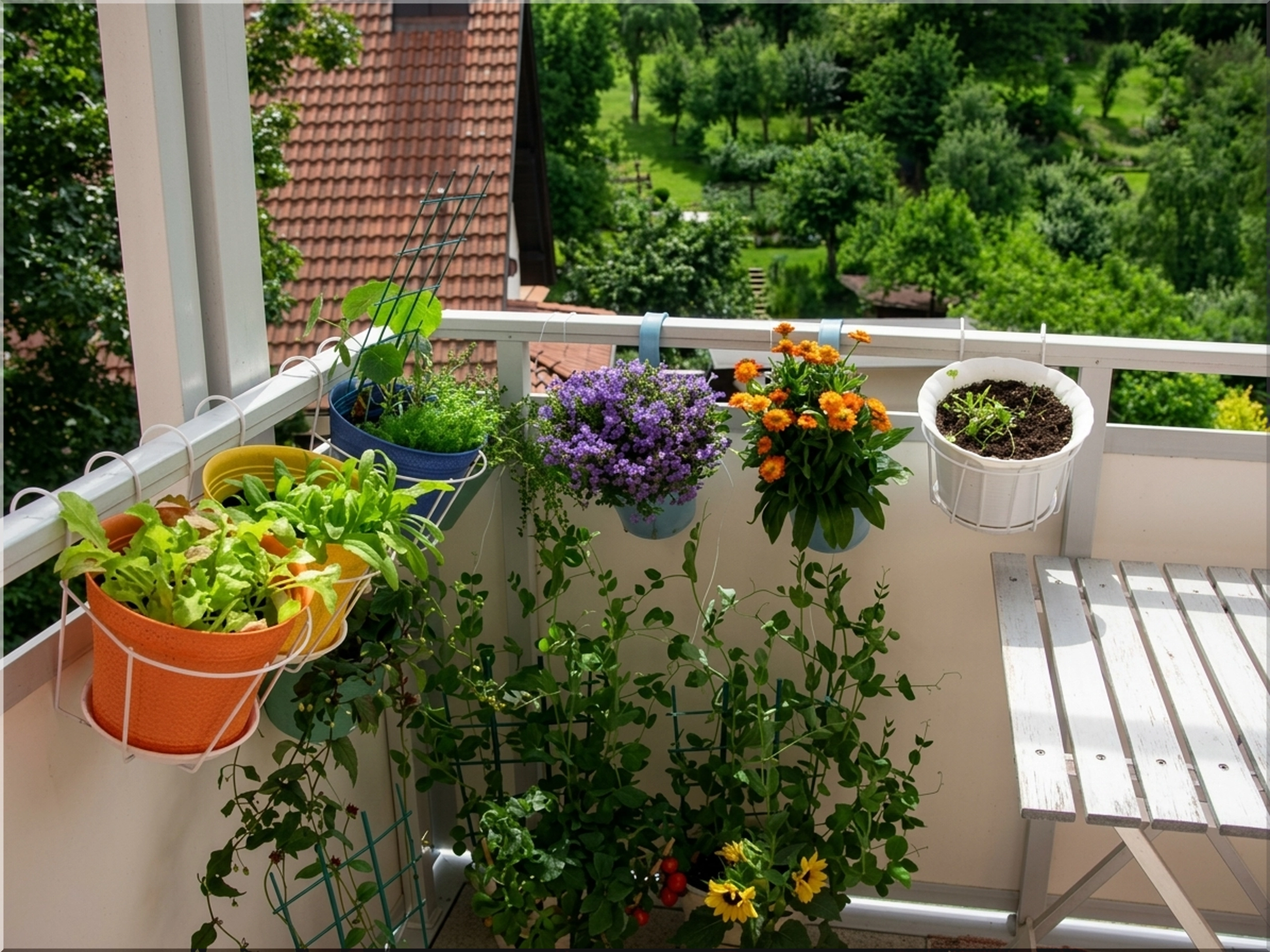
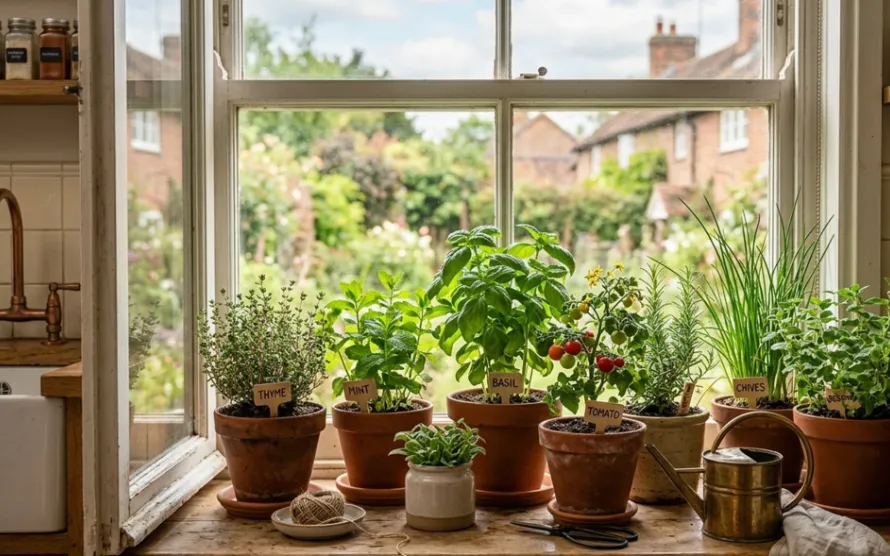
- Tomatoes, cucumbers, basil, mint, and flowering annuals that use water quickly
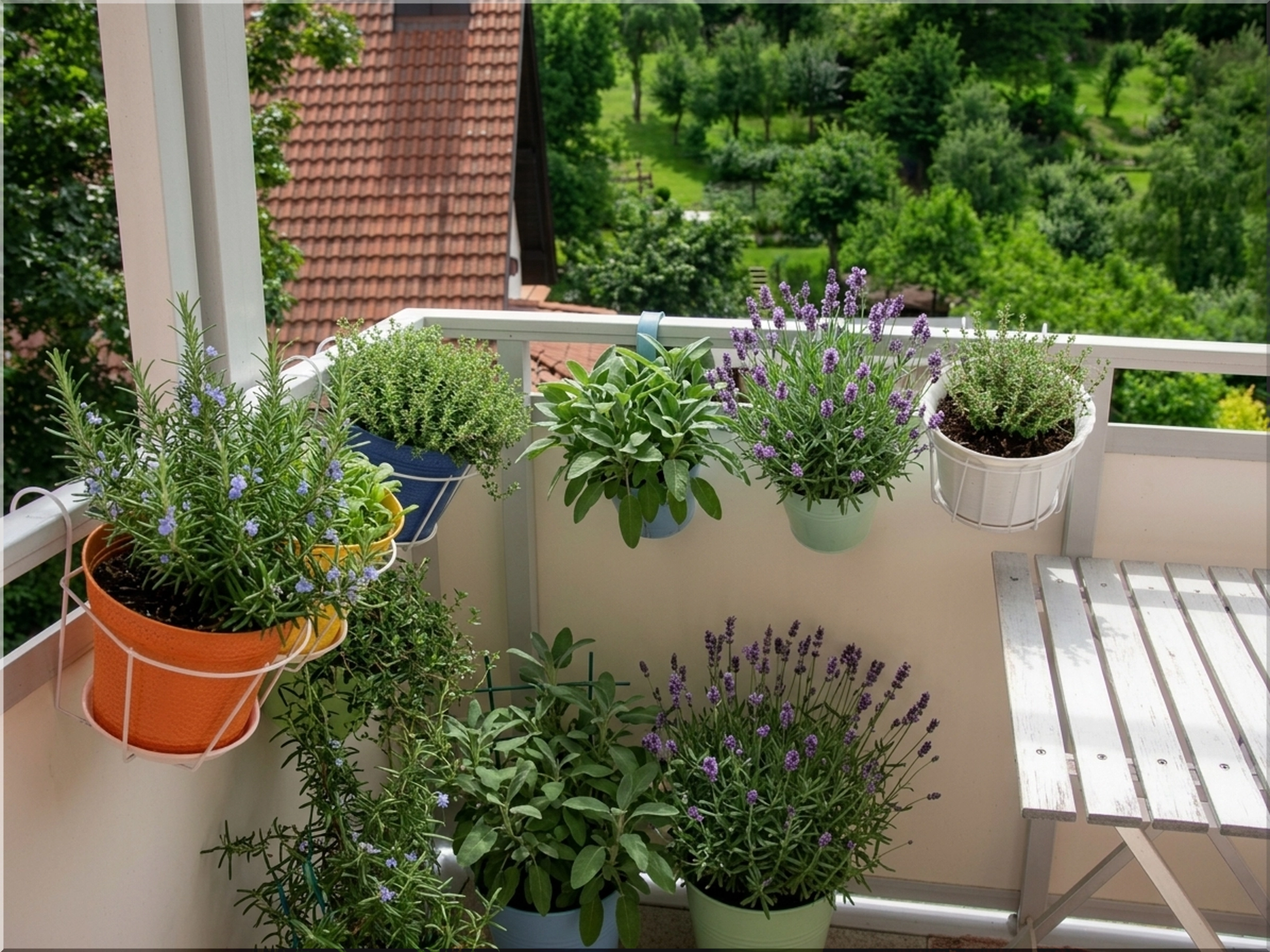
- Rosemary, thyme, lavender, sage, and many succulents that prefer drier soil
- Shaded foliage plants that need steady moisture but less frequent watering
- Hanging baskets and railing boxes that dry faster than floor-level containers
Grouping also speeds up daily checks. You can inspect the thirstiest section first during hot weather.
Place small pots behind larger containers or a wind screen if strong air movement dries them too quickly. Keep safe weight limits, emergency access, and building rules in mind when arranging the space.
Prevent Overwatering and Root Problems
Too much enthusiasm with a watering can can harm plants as quickly as neglect. Constantly wet soil pushes air from spaces around the roots. Growth slows, leaves yellow, and fungi gain favorable conditions.
Reduce the risk with a few habits:
- Check moisture below the surface before watering.
- Empty saucers after excess water drains.
- Keep drainage holes clear of compacted soil and roots.
- Reduce watering during cool or cloudy periods.
- Avoid placing every plant on one fixed schedule.
- Repot plants if dense soil stays wet for many days.
- Remove dead leaves that collect on damp soil.
Do not place gravel at the bottom of a pot as a substitute for drainage holes. Use a container with proper openings and fill it with suitable potting mix.